Dental implants
Implant Dentistry
All-on-4 Dental Implants in Turkey: a fixed full-arch bridge on four implants — who may be suitable, the treatment stages, risks, aftercare and alternatives.
Free · no obligation
Leave your name and number — a coordinator replies personally.
All-on-4 is a treatment concept in which a complete arch of teeth – upper or lower – is replaced by a single fixed bridge anchored to four dental implants. The two front implants are usually placed upright, while the two rear implants are angled backwards. That tilt allows longer implants to engage denser bone towards the front of the jaw and, in many cases, avoids the sinus in the upper jaw or the nerve canal in the lower jaw.
Because the rear implants are angled, the concept was developed partly to help people who have lost bone height at the back of the mouth to receive a fixed arch without extensive grafting. The bridge is screwed onto the implants rather than cemented, so your dental team can remove it for professional maintenance; you cannot take it out yourself.
When primary stability at surgery is sufficient, a provisional fixed bridge is often attached within a short time of implant placement. A final bridge – commonly a reinforced acrylic or zirconia-based design – is then made once the implants have integrated with the bone. Whether four implants are enough for you is a clinical decision made after scanning, not a fixed rule.
What they can help with
Results · before & after
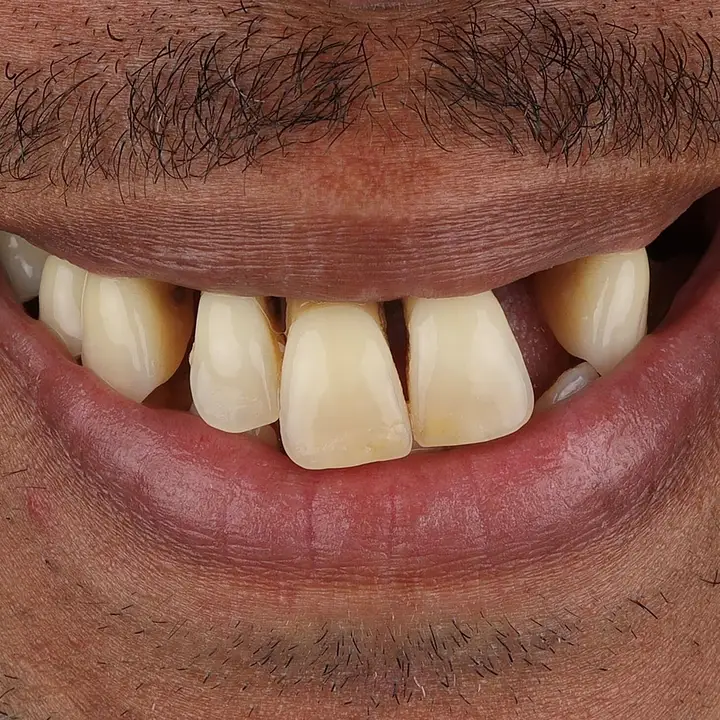
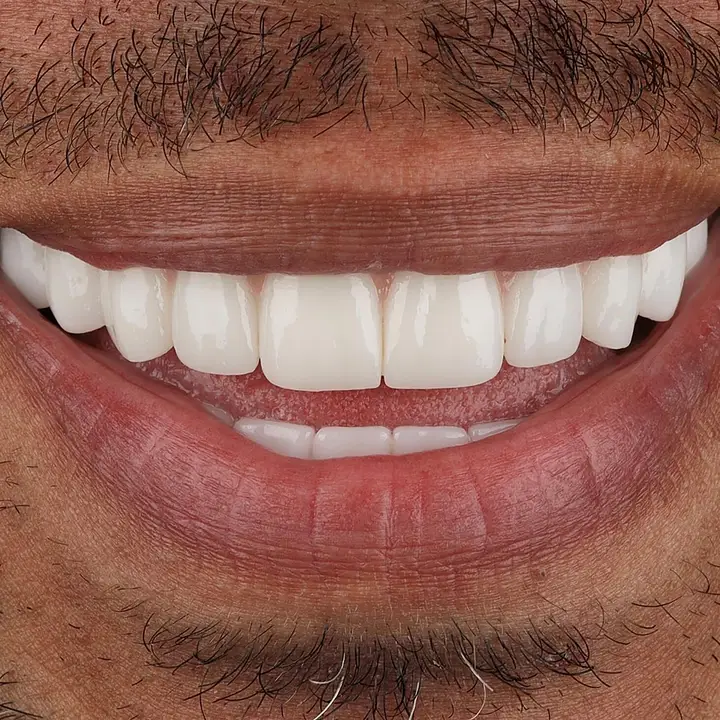
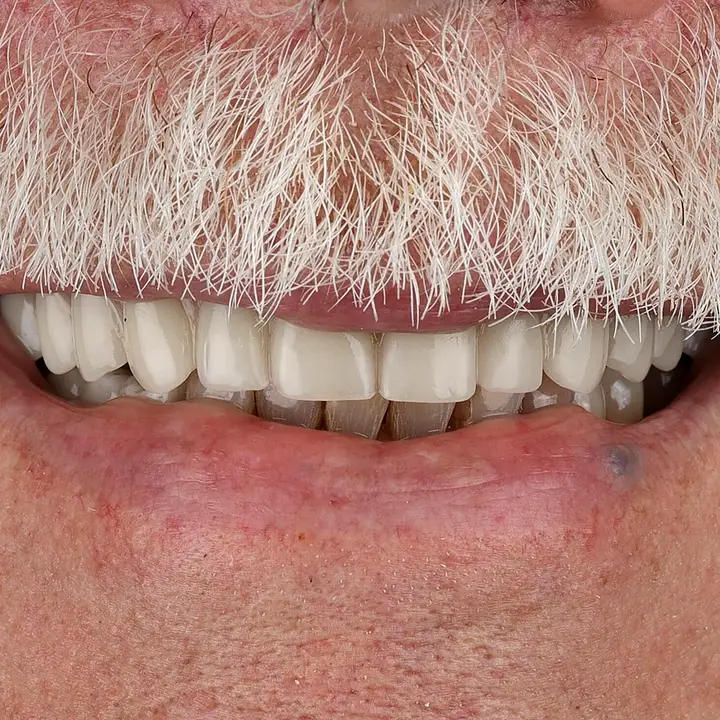
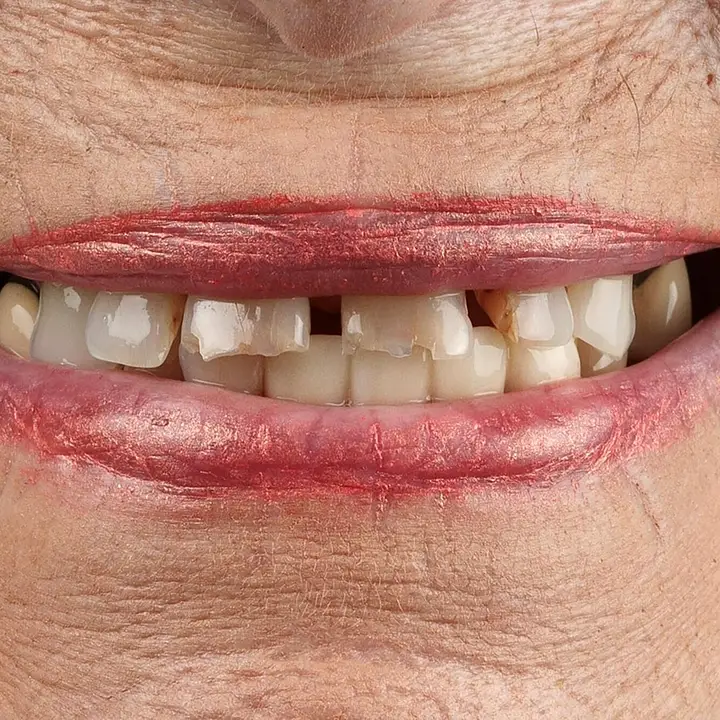
Before and after photographs from all-on-4 dental implants and related treatments at our clinic in Istanbul. Drag the handle to compare each pair.
All dental results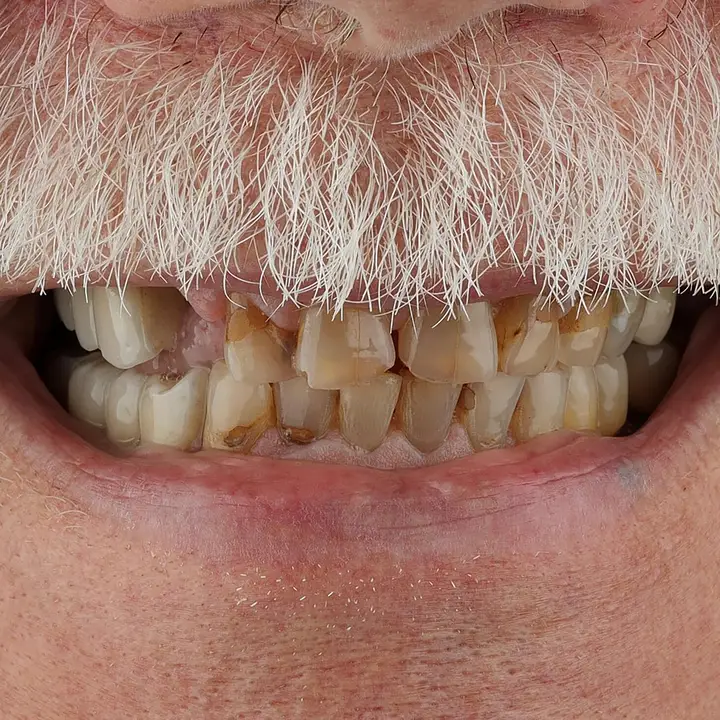
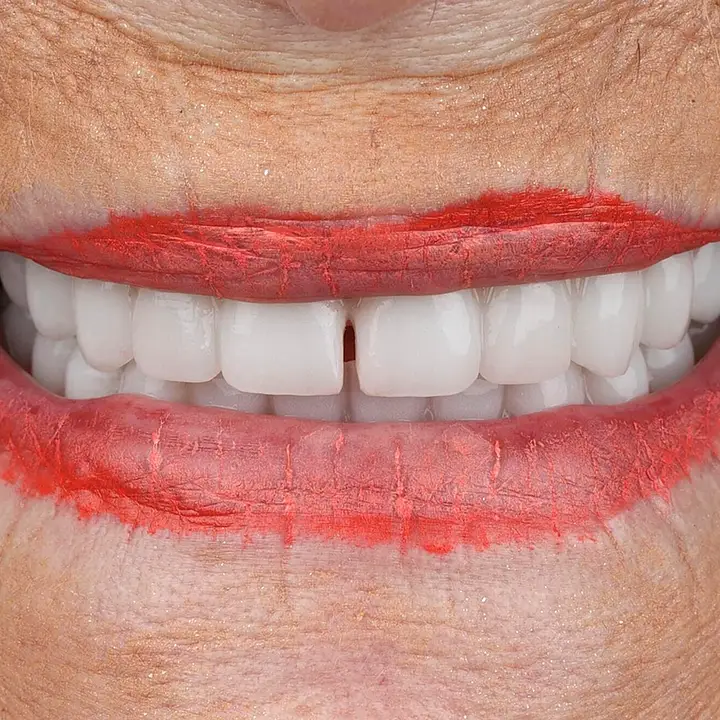
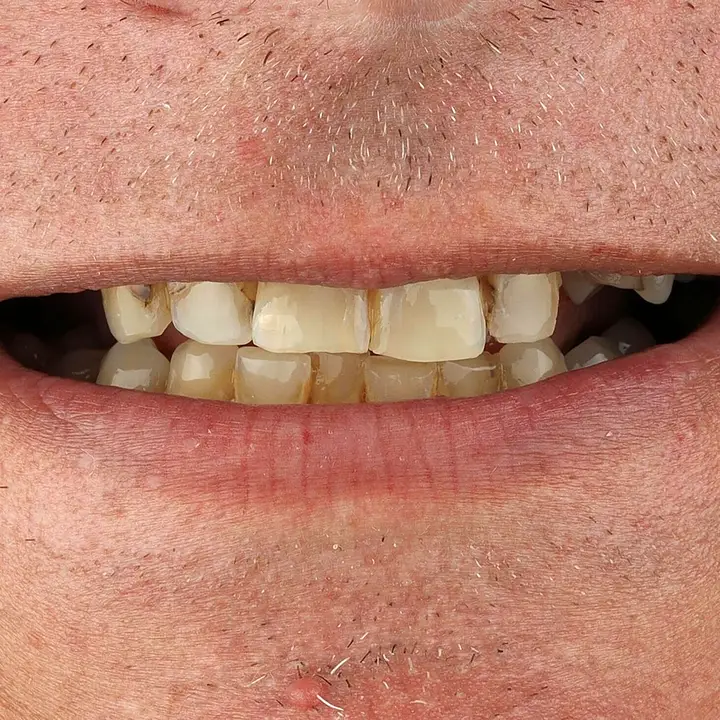
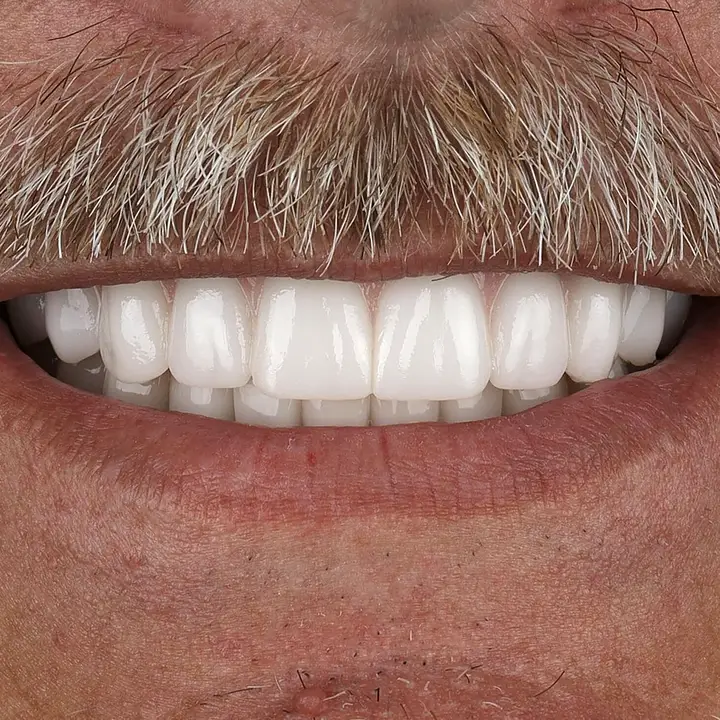

Suitability depends on bone quality and volume, bite forces and general health. A cone-beam CT scan is normally needed to judge whether the four-implant layout is appropriate or whether more implants may be advisable.
Often a good fit
Assessed carefully
Honest information
The procedure
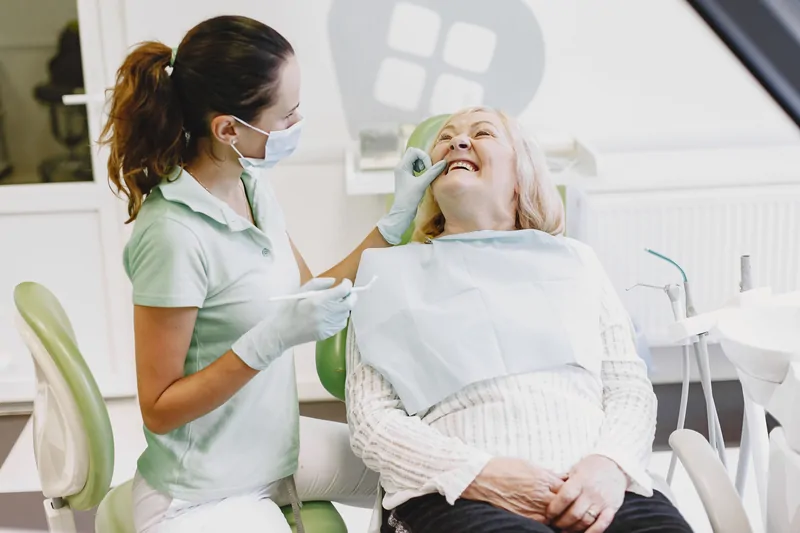
Full-arch treatment depends on precise planning. In general terms, clinicians use 3D imaging to map the bone and anatomy, then design implant positions and the bridge together so that the prosthesis is both functional and cleansable.

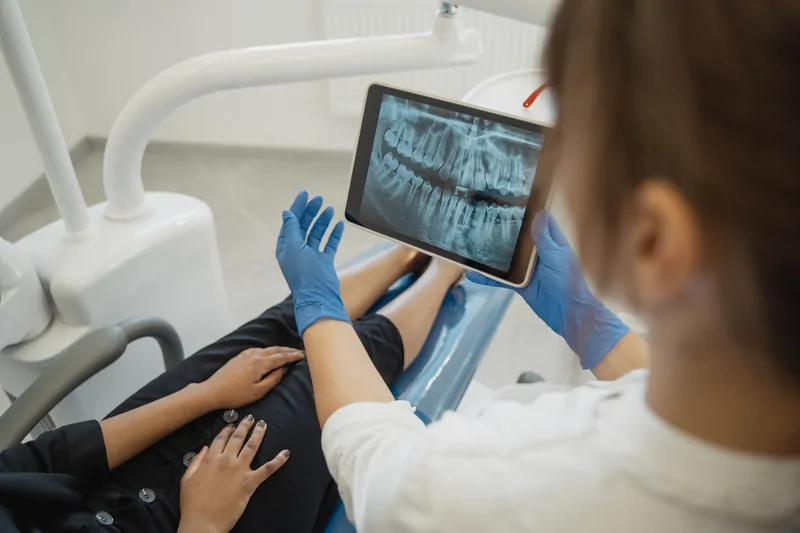
Your clinician reviews your medical history, examines the mouth and takes a cone-beam CT scan and digital impressions. The implant positions, angulation of the rear implants and the shape of the future bridge are planned digitally, sometimes with a surgical guide.
Any remaining failing teeth are removed on the day of surgery. The bone ridge is often smoothed and levelled so that the bridge has a consistent, cleansable base and the join between bridge and gum sits out of sight where possible.
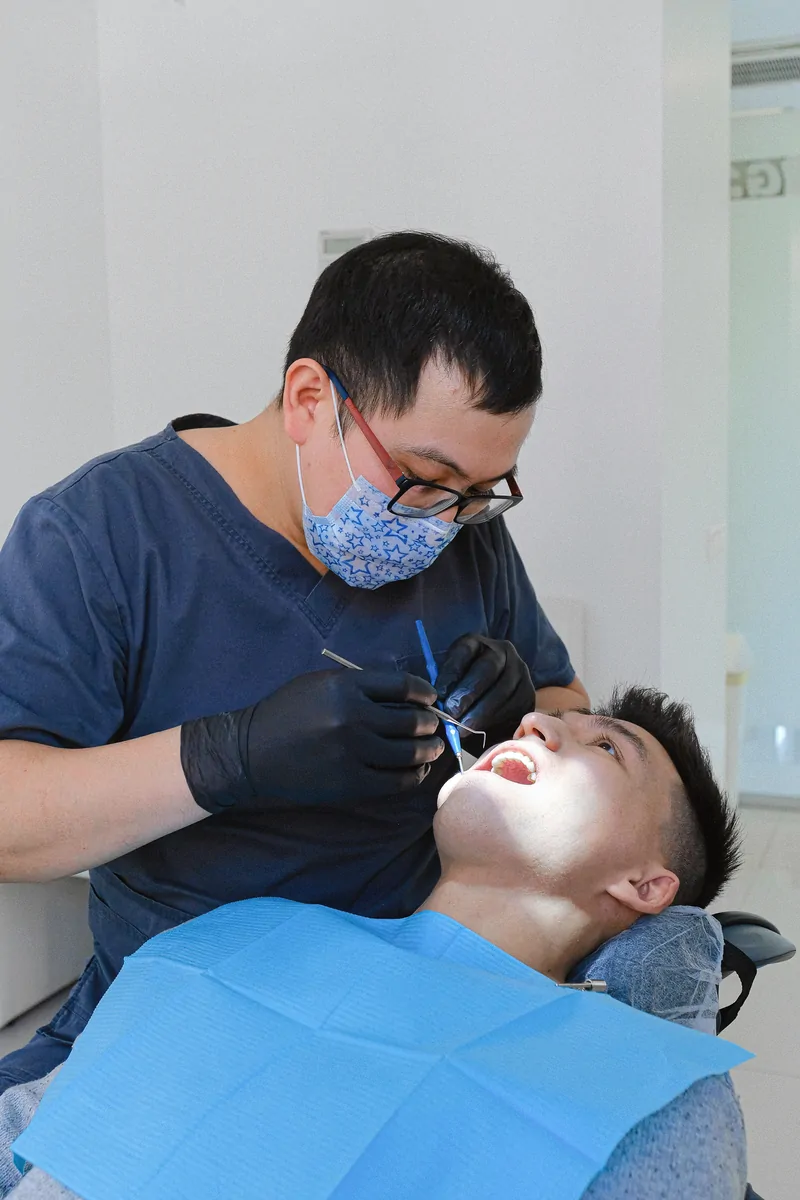
Two implants are positioned towards the front and two are tilted at the back of the arch. Multi-unit abutments are commonly attached to correct the angle so that the bridge screws can emerge in convenient positions.
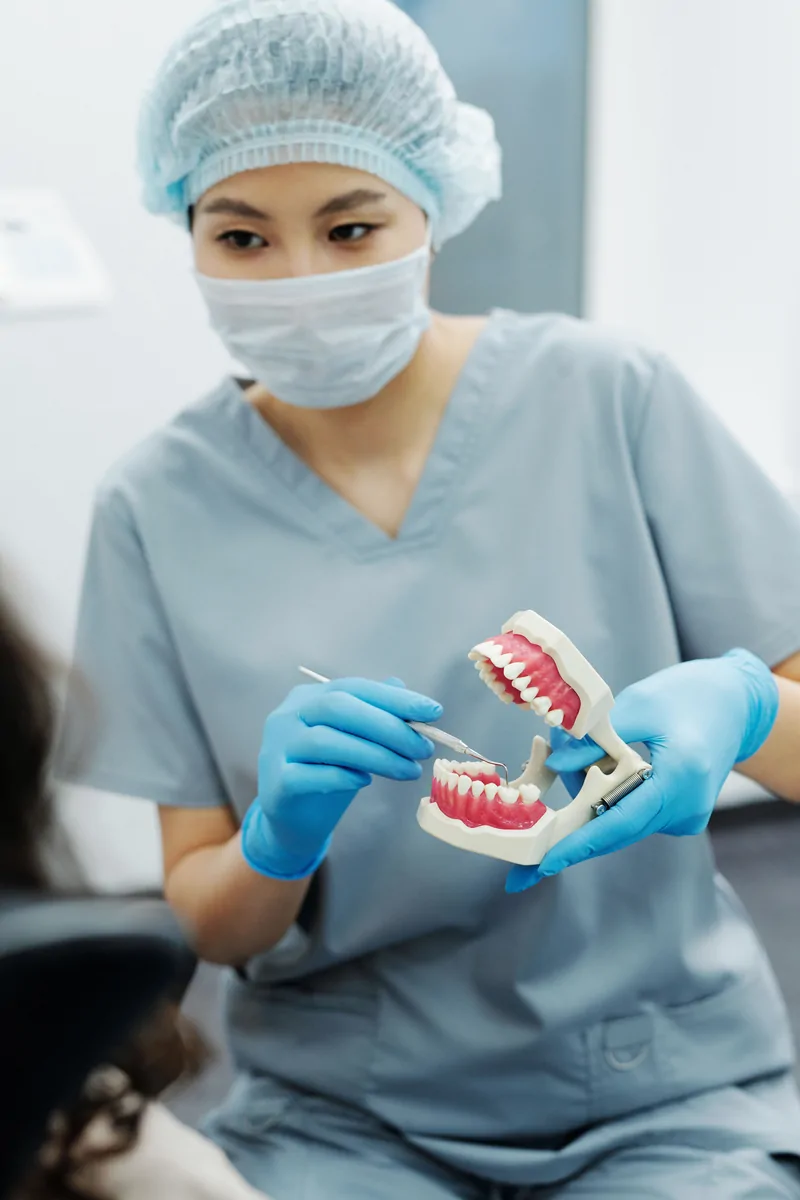
If each implant reaches adequate initial stability, a lightweight provisional bridge may be screwed in within hours or days. If stability is lower, the implants may be left to heal under a temporary denture first. A soft diet is advised during this phase.
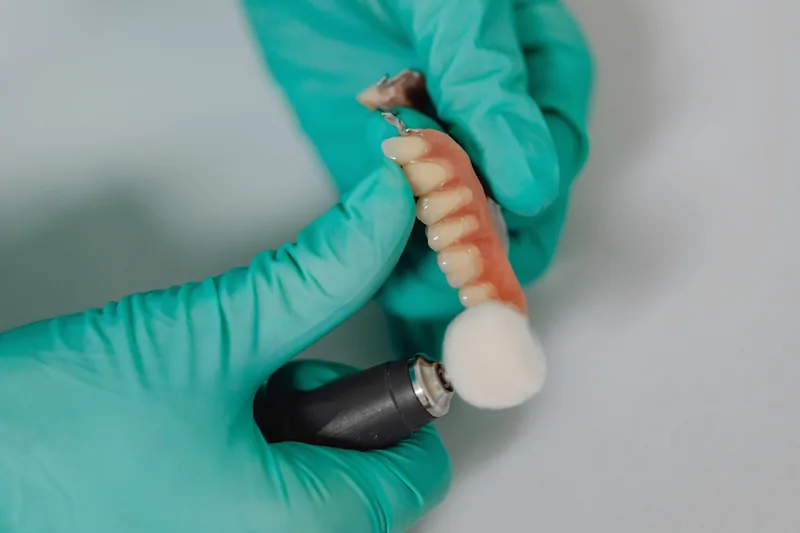
The implants fuse with the surrounding bone over a period that commonly lasts several months. Gums reshape and remodel during this time, which is why the provisional bridge is not intended to be the final one.
New scans are taken and a definitive bridge is designed, tried in and fitted. Your team checks the bite, shows you how to clean underneath the bridge and sets up a schedule for reviews and periodic removal for professional cleaning.
Gallery

All-on-4 and All-on-6 both give you a fixed bridge that only your clinician can remove; the difference is the number of implants supporting it. Four implants with tilted rear fixtures can suit jaws with limited posterior bone, whereas six implants may distribute load more evenly and offer more redundancy where bone permits. An implant-supported denture is different again: it is a removable overdenture that you take out to clean, usually anchored on fewer implants and often covering more of the gum.
Before & after treatment
Before you travel
Looking after them
In their words
Dental patients describe their experience — from the first conversation to aftercare.
All patient reviewsGoogle reviews
Spoken with us already? Share your experience on Google.
Honest reviews — good or critical — help the next person decide. We read every one and never offer anything in exchange.
Questions
General answers — your own plan always depends on an individual assessment.
All dental questionsIn many cases a provisional fixed bridge is attached within a short time of surgery, but only if the implants achieve sufficient initial stability. If they do not, a temporary removable denture may be used while they heal. Your clinician will explain which approach is planned for you.
For many people, four well-positioned implants can support a full-arch bridge. However, bone quality, bite force and grinding habits all matter, and some patients are advised to have more implants. This is assessed from your scans.
No. The bridge is screwed onto the implants and is removed only by your dental team for maintenance or repairs. Daily cleaning is done with the bridge in place.
There is no fixed lifespan. Implants can serve for many years with good care, while the bridge itself may need repairs, relining or replacement over time depending on the material, your bite and maintenance.
The angled rear implants are intended to reduce the need for grafting, but some people still need it, particularly where bone at the front of the jaw is thin. Your 3D scan will show whether grafting is likely.
If this option is relevant to you, availability at our clinic and your suitability are confirmed during your consultation.
Also available
Free consultation
Tell us what you would like to change. A coordinator replies personally and arranges a dentist’s review of your photos — free, without obligation.
A person replies. Monday to Saturday, Istanbul time.
VHFree consultation
A coordinator replies personally — free, no obligation.