Porcelain veneers
Restorative Dentistry
Dental Crowns in Turkey: protecting weakened, cracked or root-treated teeth — material options, digital scanning, temporary crown and a precise final fit.

Free · no obligation
Leave your name and number — a coordinator replies personally.
A dental crown is a custom-made cap that covers the entire visible part of a tooth, down to or near the gum line. It holds a weakened tooth together, protects it from fracture and restores its natural shape, size and colour. Crowns are a restorative treatment first: they are used when a tooth has lost too much structure for a filling to be reliable, although they can also improve the appearance of a misshapen or discoloured tooth.
To make room for a crown, the tooth is reduced evenly on all sides. This is more preparation than a veneer requires, which is why a crown is generally chosen when the tooth genuinely needs full coverage — for example after root canal treatment, when a large filling has failed, or when a crack runs across the tooth.
Crowns can be made from several materials. Zirconia is very strong and often used for back teeth or bridges; lithium disilicate offers high translucency for front teeth; layered porcelain can achieve detailed natural effects. Your clinician will recommend a material based on the tooth’s position, your bite, the colour of the prepared tooth and your expectations. Crowns can also sit on top of dental implants.
What they can help with
Results · before & after
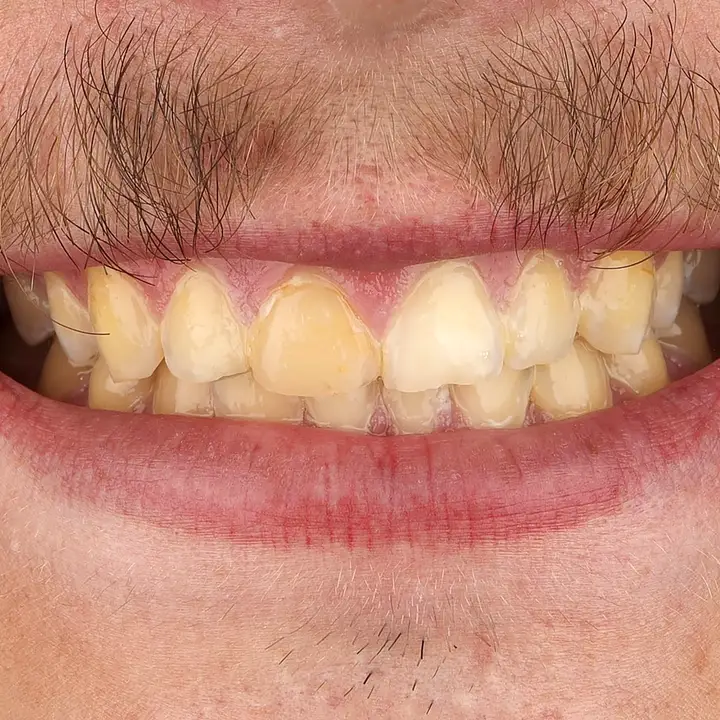
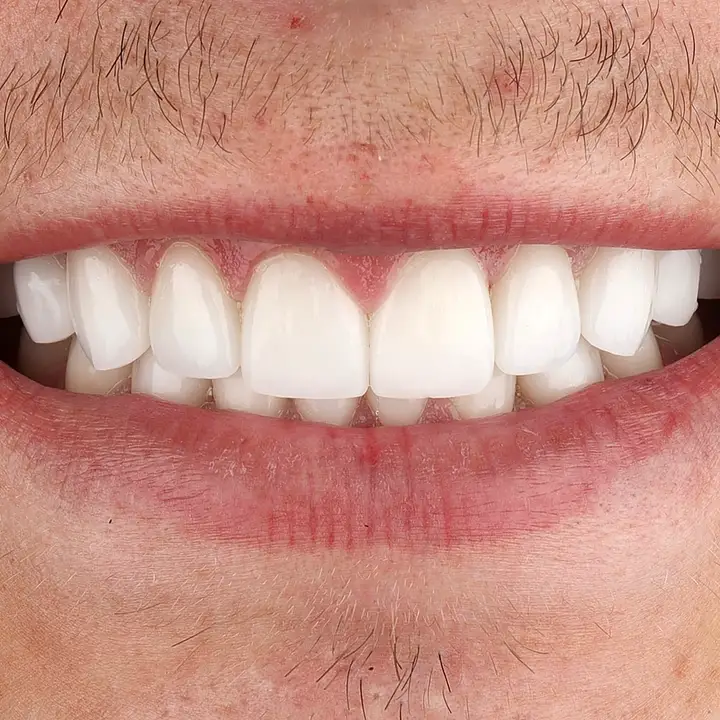
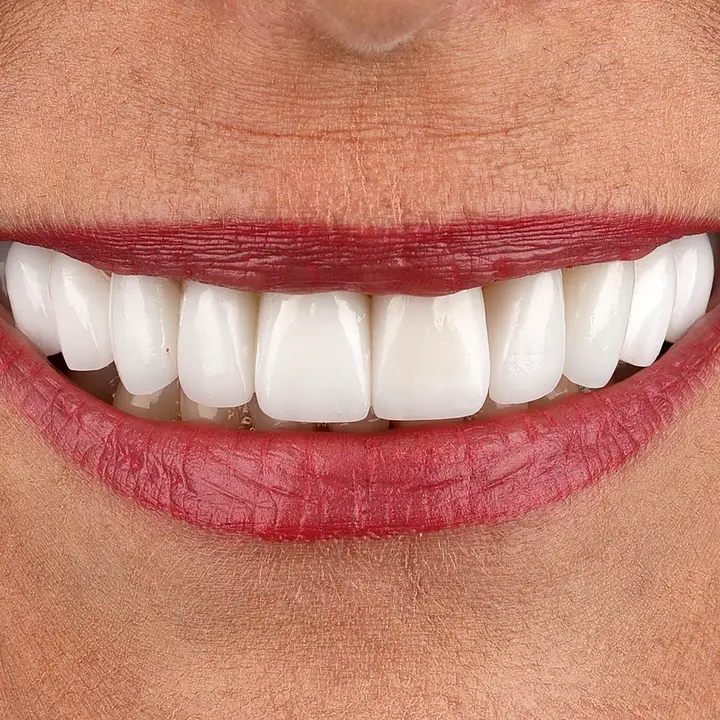
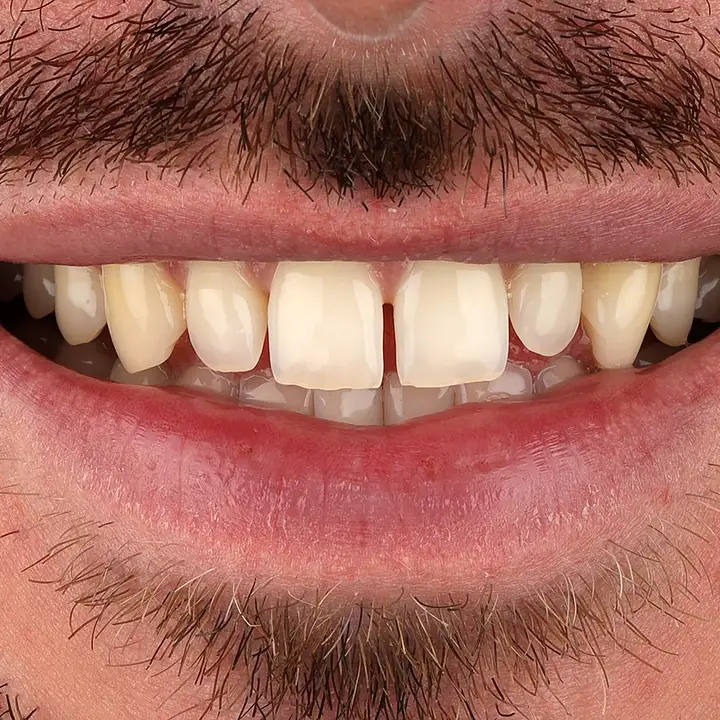
Before and after photographs from dental crowns and related treatments at our clinic in Istanbul. Drag the handle to compare each pair.
All dental results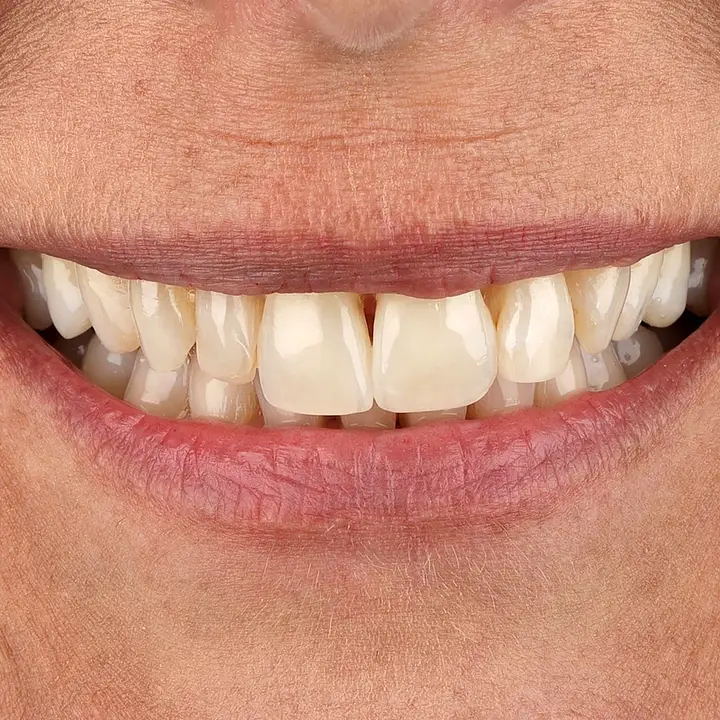
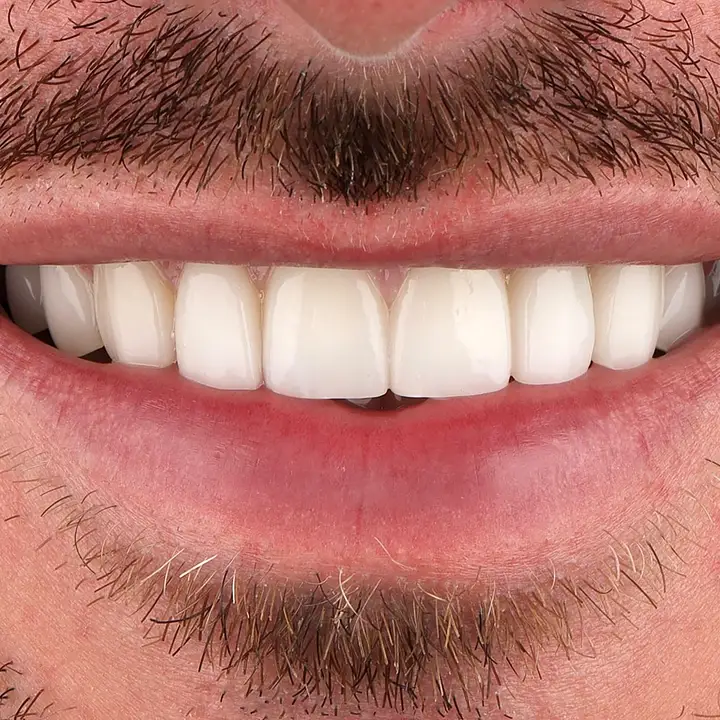
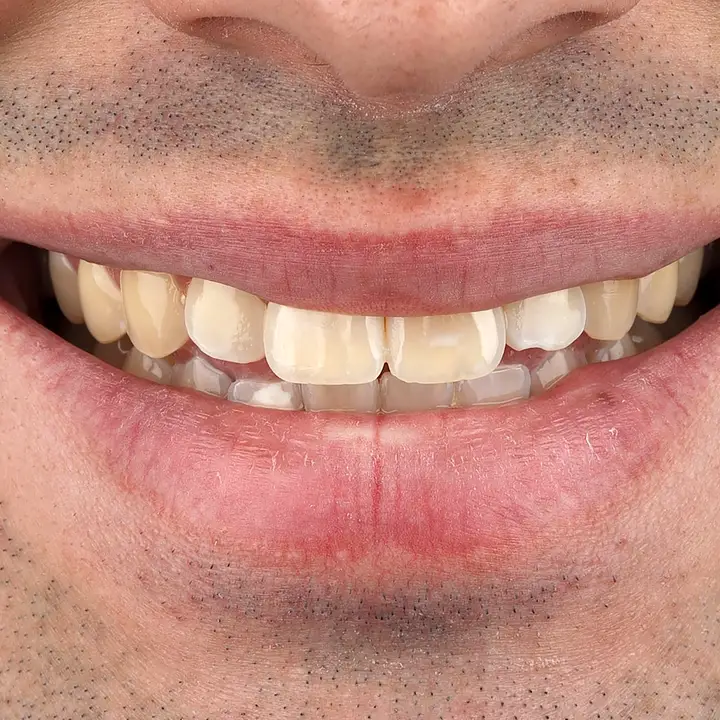
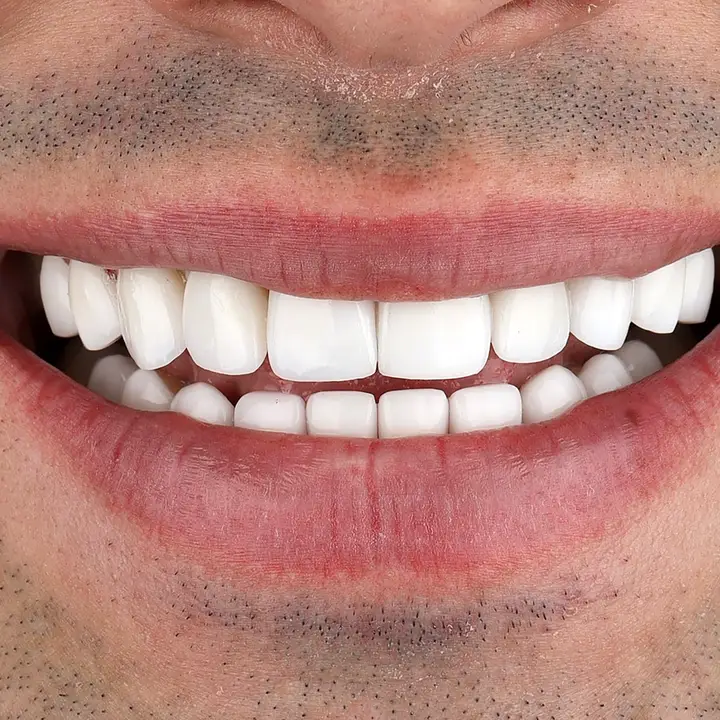

Crowns are suitable for many teeth that need structural protection. Because preparation is irreversible, your clinician will first consider whether a more conservative option such as an onlay or veneer could achieve the same aim.
Often a good fit
Assessed carefully
Honest information
The procedure
Material, thickness and design are chosen for the tooth’s position and the forces it faces. A molar under heavy bite needs different properties from a front tooth seen every time you smile.

Your clinician examines the tooth, checks the gum and takes an X-ray to make sure the root and surrounding bone are healthy. If the nerve is inflamed or infected, root canal treatment may be needed before the crown.
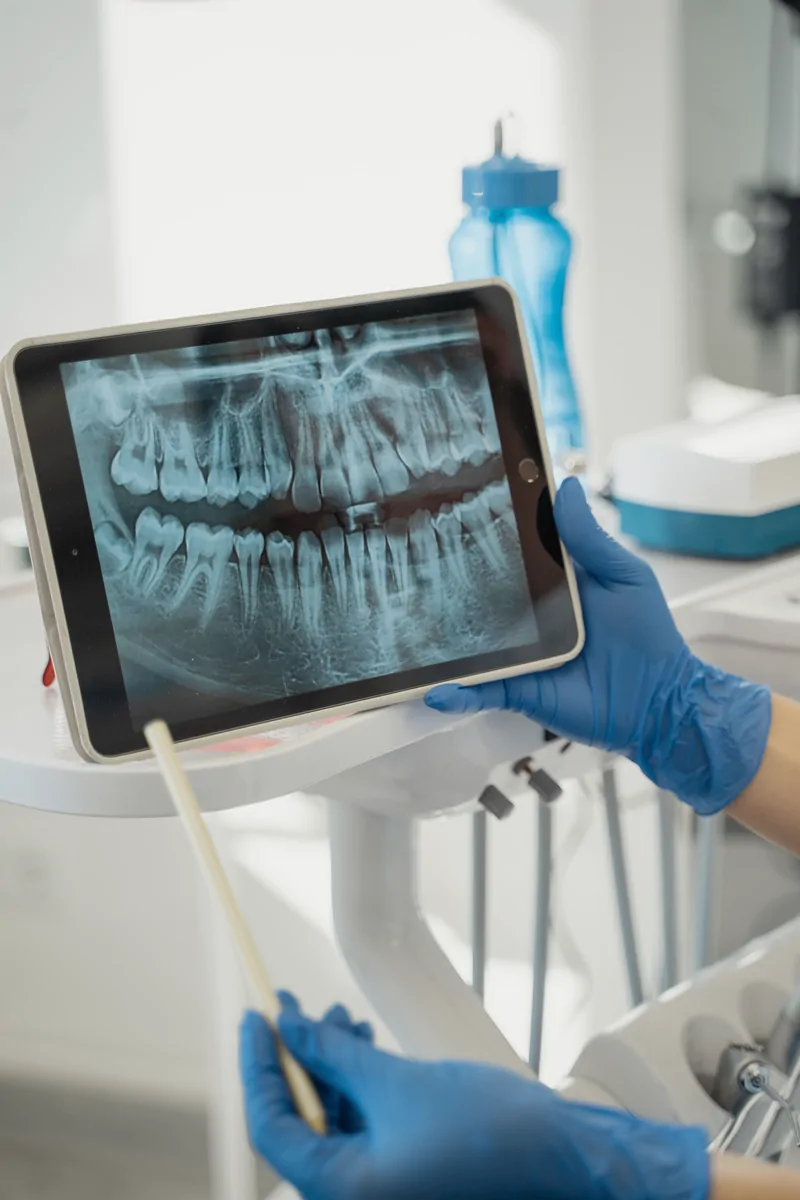
When a large part of the tooth is missing, a core of filling material — sometimes with a post in a root-treated tooth — is placed to give the crown a solid foundation.
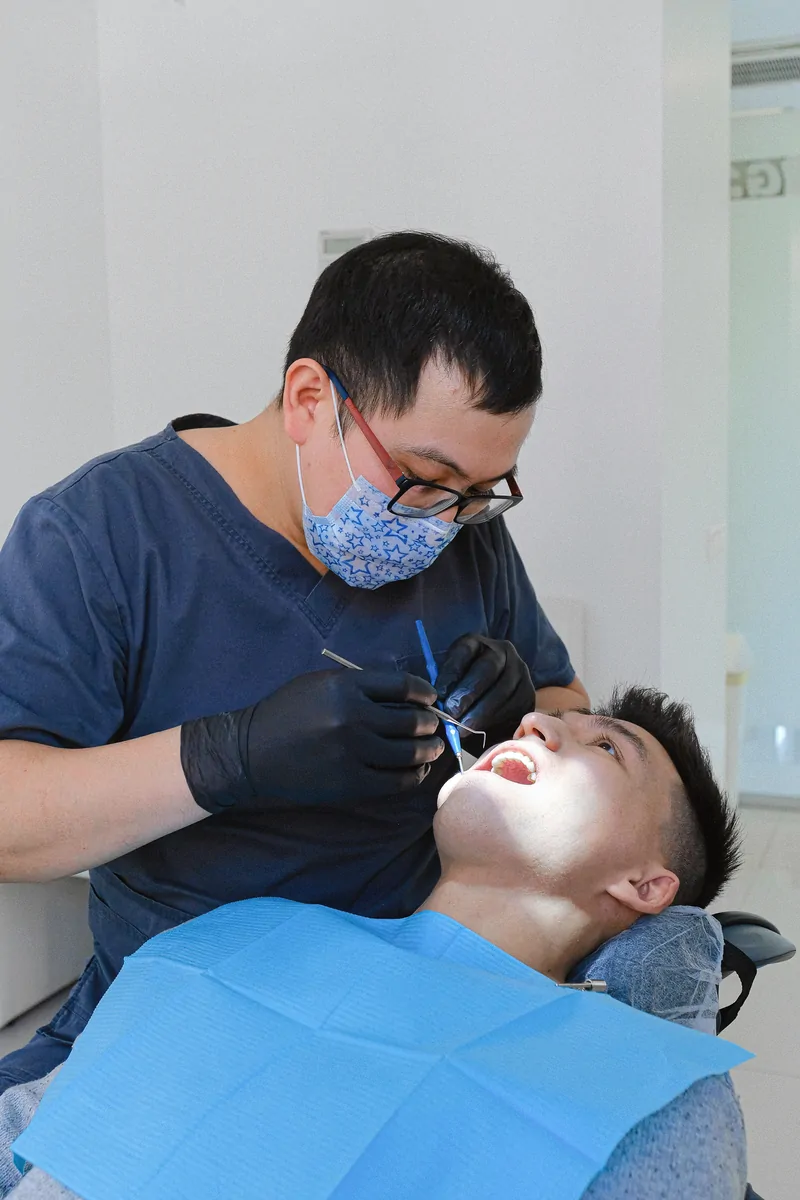
Under local anaesthetic, the tooth is shaped evenly on all sides to create space for the crown material. The amount removed depends on the material chosen; stronger materials can sometimes allow thinner crowns.
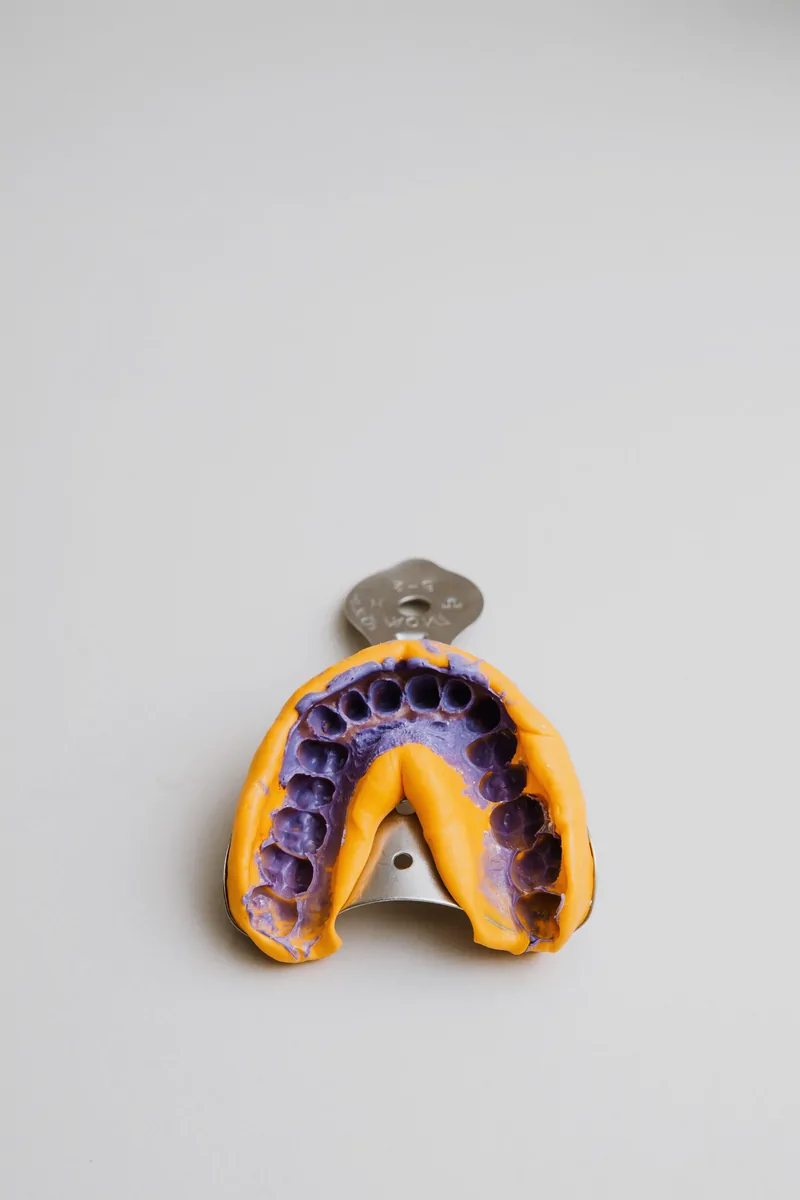
The prepared tooth and bite are recorded with an intraoral scanner or impression, and the shade is matched. A temporary crown protects the tooth while the final one is made.
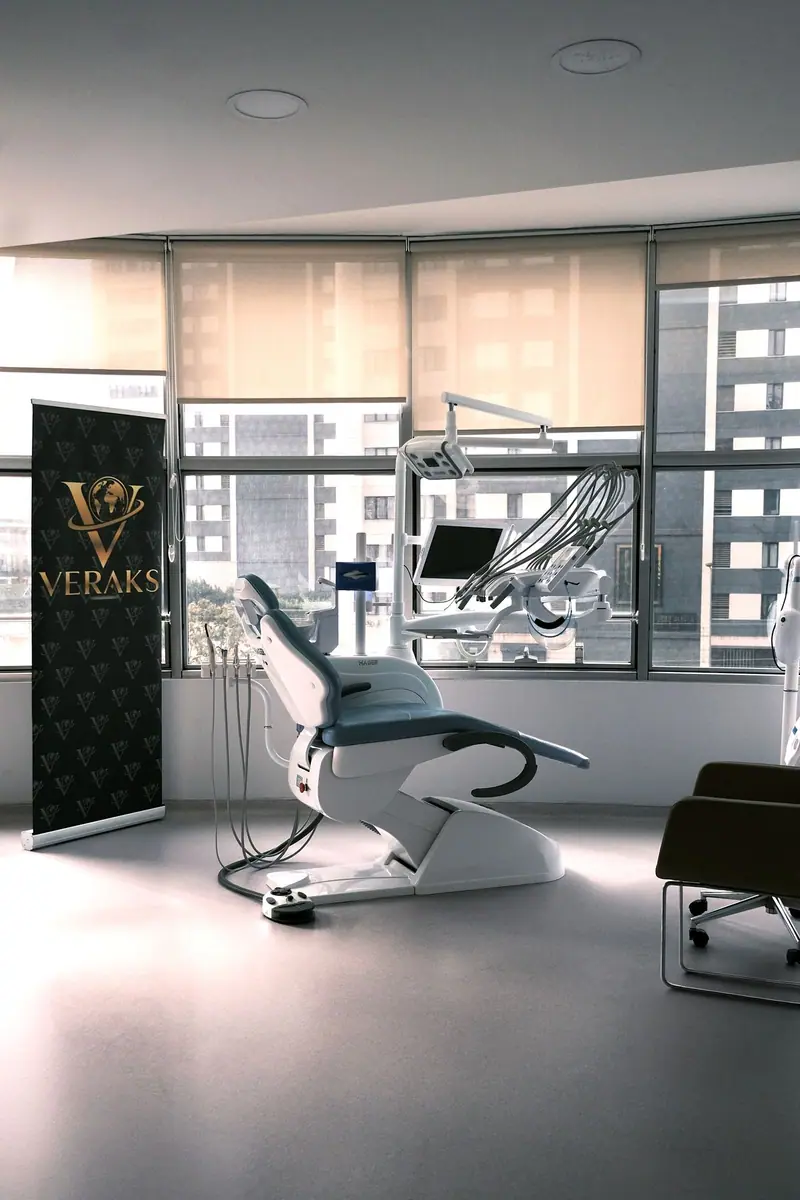
The final crown is tried in to check fit at the gum line, contact with neighbouring teeth, colour and bite. Once everything is right, it is cemented or bonded and any excess is removed.
Gallery
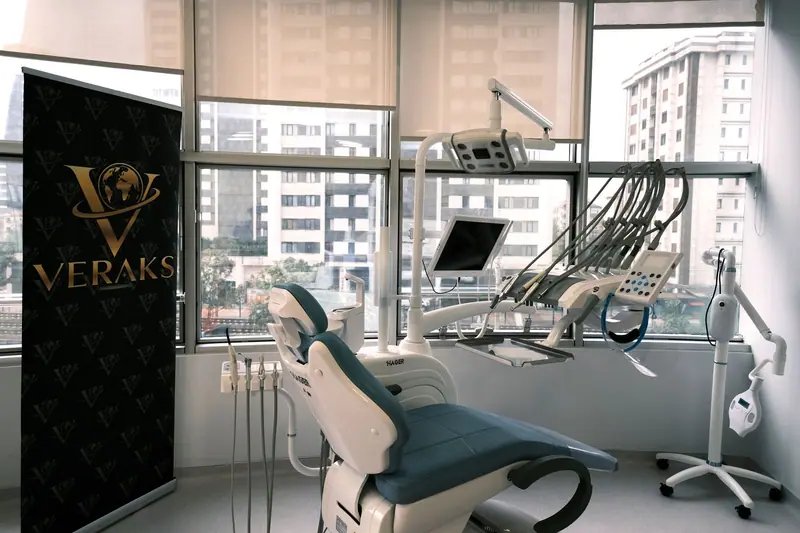



A crown wraps around the entire tooth, so it is used when a tooth needs strengthening — after root canal treatment, with large fillings or cracks. A veneer covers only the front surface and biting edge of a structurally sound tooth, and a laminate is a thinner veneer with minimal preparation for smaller cosmetic changes. Terms such as e-max, zirconium and porcelain describe materials rather than separate procedures: a zirconium crown uses high-strength zirconia, often chosen for back teeth or bridges; an e-max restoration uses lithium disilicate glass-ceramic, valued for translucency on front teeth and available as both crowns and veneers; and a porcelain crown uses layered ceramic for detailed aesthetics, sometimes over a stronger core. Your clinician can explain which combination of restoration type and material suits each tooth.
Before & after treatment
Before you travel
Looking after them
In their words
Dental patients describe their experience — from the first conversation to aftercare.
All patient reviewsGoogle reviews
Spoken with us already? Share your experience on Google.
Honest reviews — good or critical — help the next person decide. We read every one and never offer anything in exchange.
Questions
General answers — your own plan always depends on an individual assessment.
All dental questionsIt varies. Many crowns last for years, but lifespan depends on the material, the health of the tooth underneath, your bite, grinding habits and oral hygiene. Regular check-ups help detect problems early.
Preparation is done under local anaesthetic, so it should be comfortable. Some tenderness of the gum and mild sensitivity are common for a few days afterwards.
Modern ceramic crowns can be shaded and shaped to blend with neighbouring teeth. On front teeth, materials with higher translucency are often chosen. Your clinician will check the shade with you before final fitting.
Not always. Back teeth that have been root-treated are often advised to have a crown or onlay because they take heavy bite forces. Front teeth with little damage may only need a filling. Your clinician will advise based on the tooth.
Occasionally, especially if the tooth underneath is short or decays at the margin. If a crown comes loose, keep it safe and contact the clinic or a local dentist so it can be checked and re-cemented if appropriate.
Also available
Free consultation
Tell us what you would like to change. A coordinator replies personally and arranges a dentist’s review of your photos — free, without obligation.
A person replies. Monday to Saturday, Istanbul time.
VHFree consultation
A coordinator replies personally — free, no obligation.