Porcelain veneers
Restorative Dentistry
Porcelain Dental Crowns in Turkey: porcelain-fused-to-metal vs all-ceramic options, when a crown is needed, how teeth are prepared, risks and caring for your crown.

Free · no obligation
Leave your name and number — a coordinator replies personally.
A dental crown is a cap that covers the whole visible part of a tooth, down to or near the gumline. It is used when a tooth is too damaged, weakened or discoloured to be reliably repaired with a filling. “Porcelain crown” is a broad term for crowns with a ceramic, tooth-coloured surface, and there are two main families: porcelain-fused-to-metal (PFM) crowns and all-ceramic crowns.
A porcelain-fused-to-metal crown has a thin metal alloy framework that gives strength, with layers of porcelain fired over it for a natural colour. These crowns have a long clinical track record and can be robust in heavy-biting areas. Because the metal blocks light, they can look more opaque than natural teeth, and a thin dark line may become visible at the gum margin if the gums recede.
All-ceramic crowns are made entirely of ceramic — for example layered porcelain, lithium disilicate glass-ceramic or zirconia. Without metal, light can pass through more like natural enamel, which generally gives a more lifelike appearance, especially on front teeth. Their strength and the amount of tooth reduction required vary by material. Your clinician will weigh appearance, strength, bite and the condition of the tooth when recommending one.
What they can help with
Results · before & after
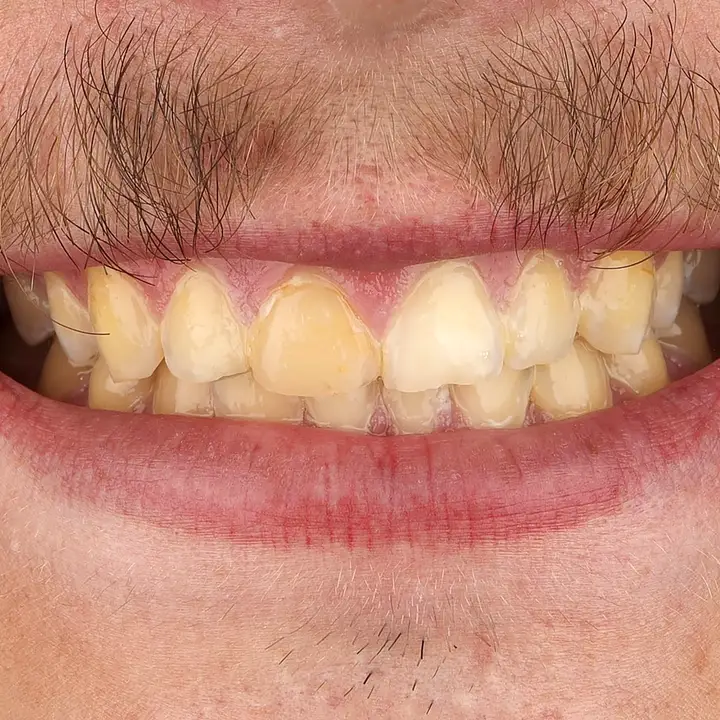
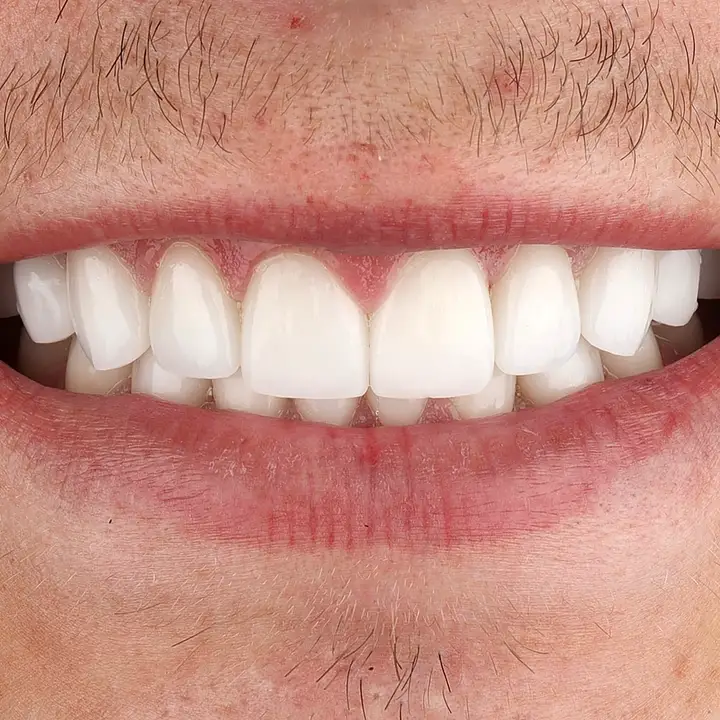
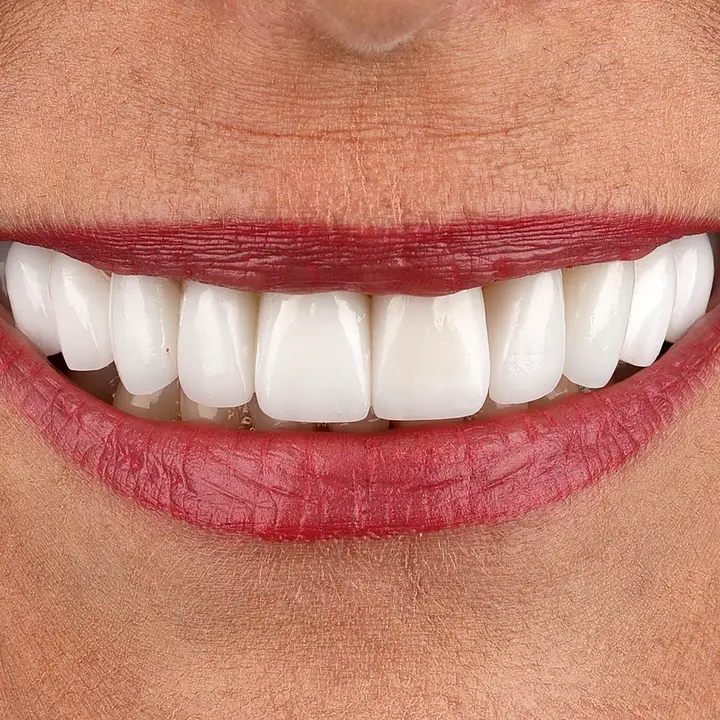
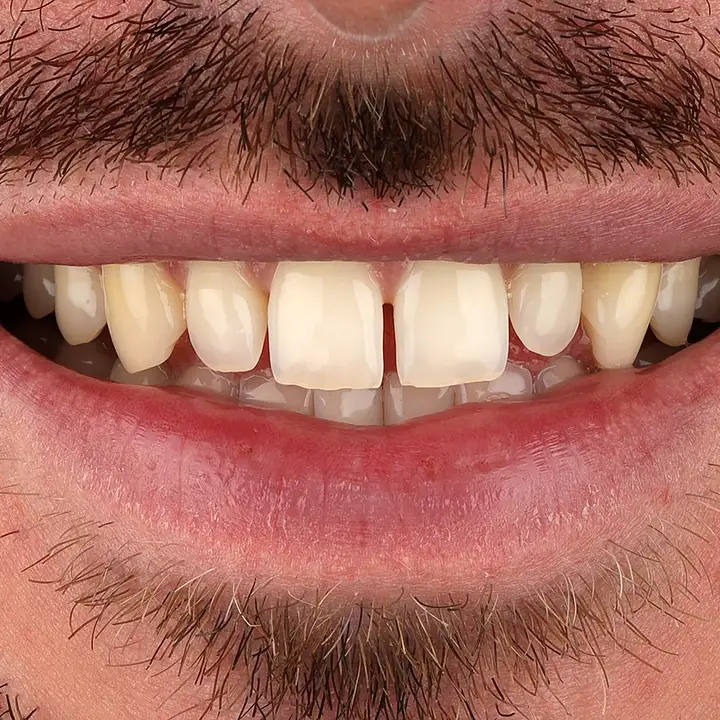
Before and after photographs from porcelain dental crowns and related treatments at our clinic in Istanbul. Drag the handle to compare each pair.
All dental results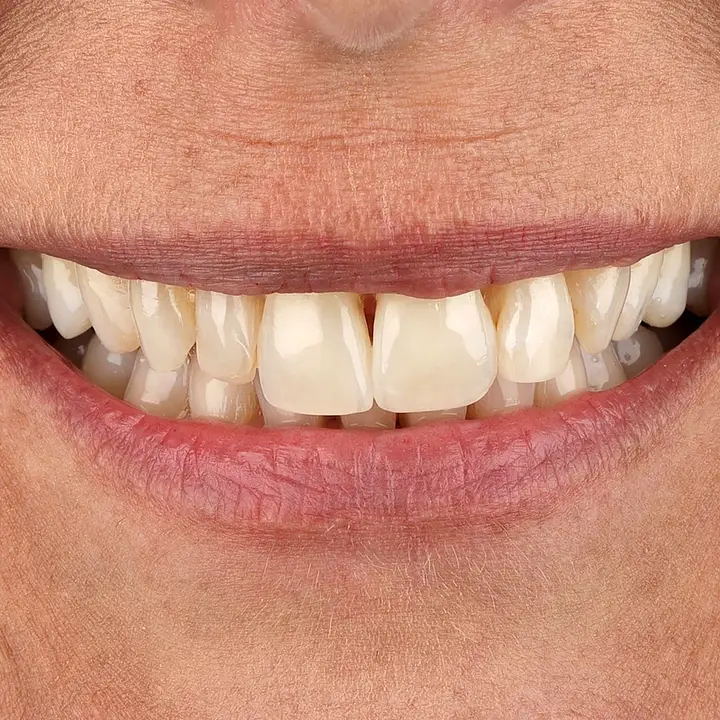
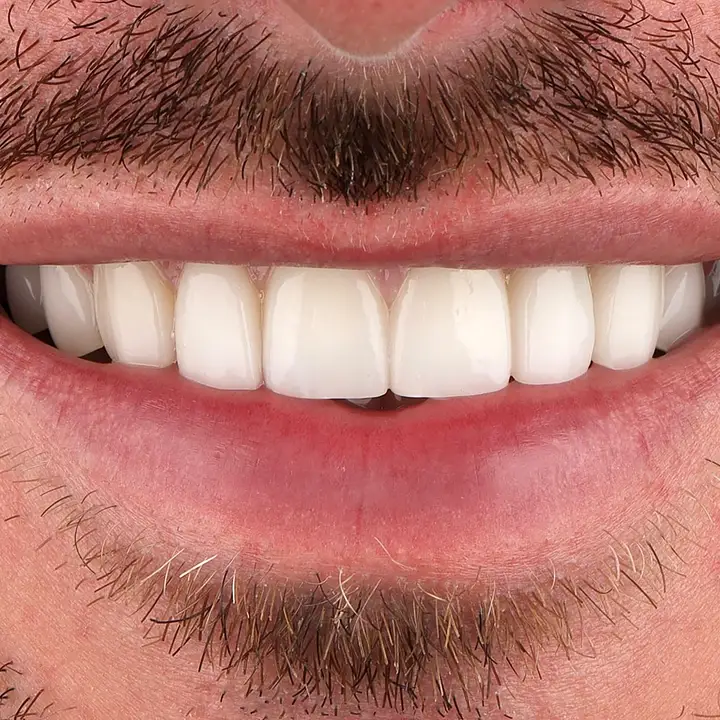
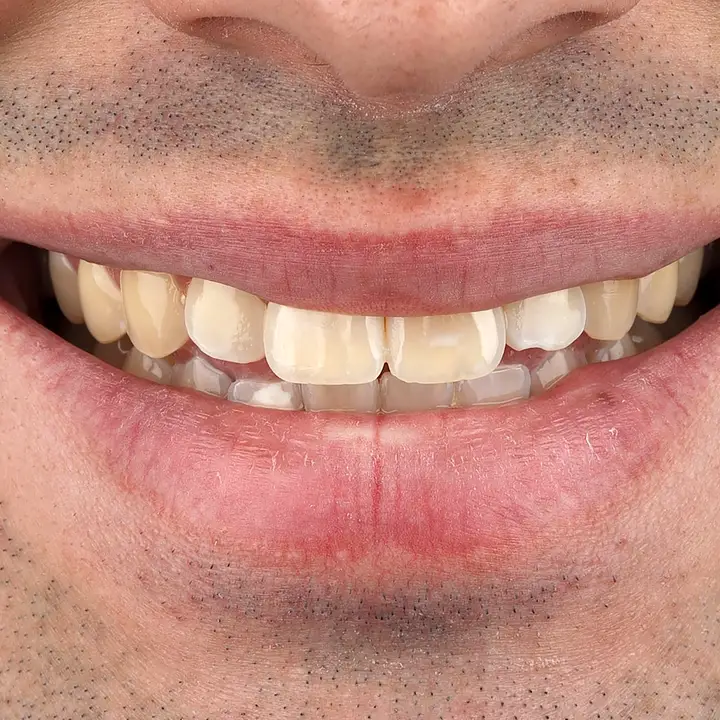
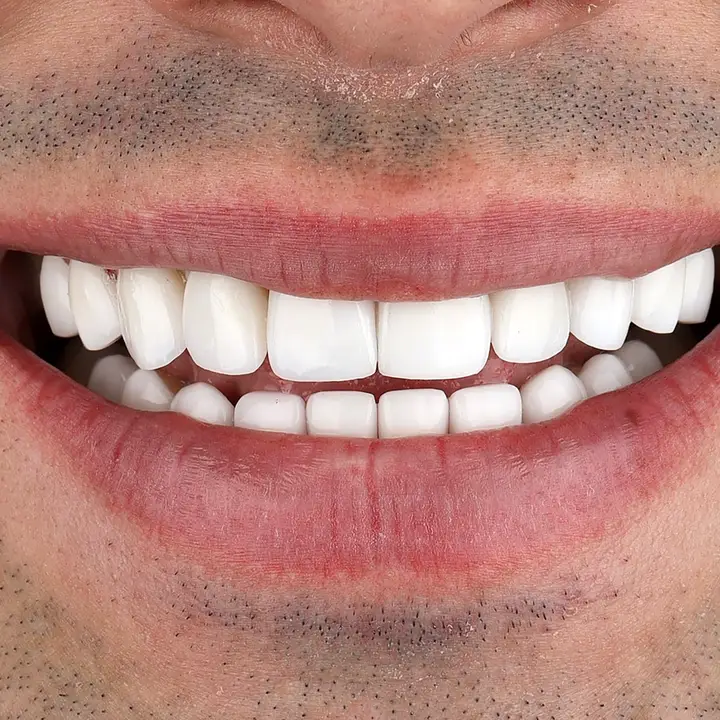

Crowns are considered when a tooth needs more support than a filling or veneer can give. The tooth must have a healthy root, adequate bone support and enough structure to hold the crown.
Often a good fit
Assessed carefully
Honest information
The procedure
The choice of crown starts with the tooth: how much of it remains, where it sits in the mouth, and how much force it must withstand.
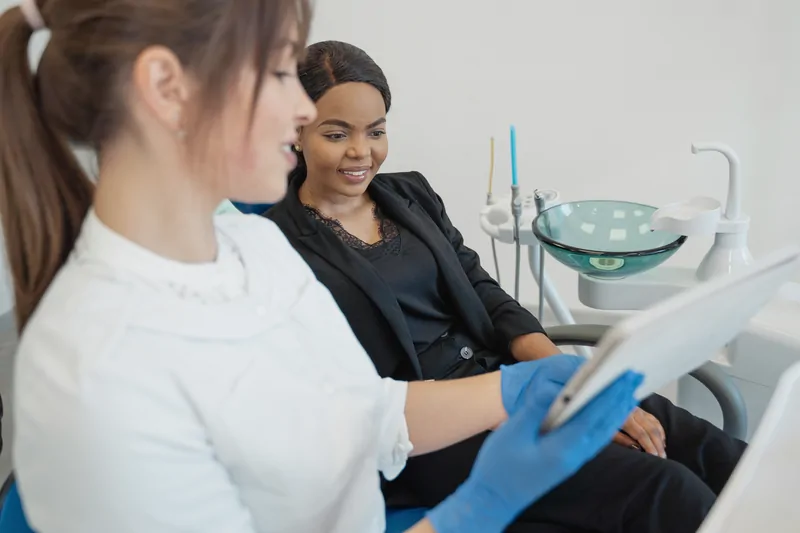
Your clinician examines the tooth, takes X-rays to check the root and bone, and discusses whether a porcelain-fused-to-metal or all-ceramic crown suits its position, your bite and your appearance goals.
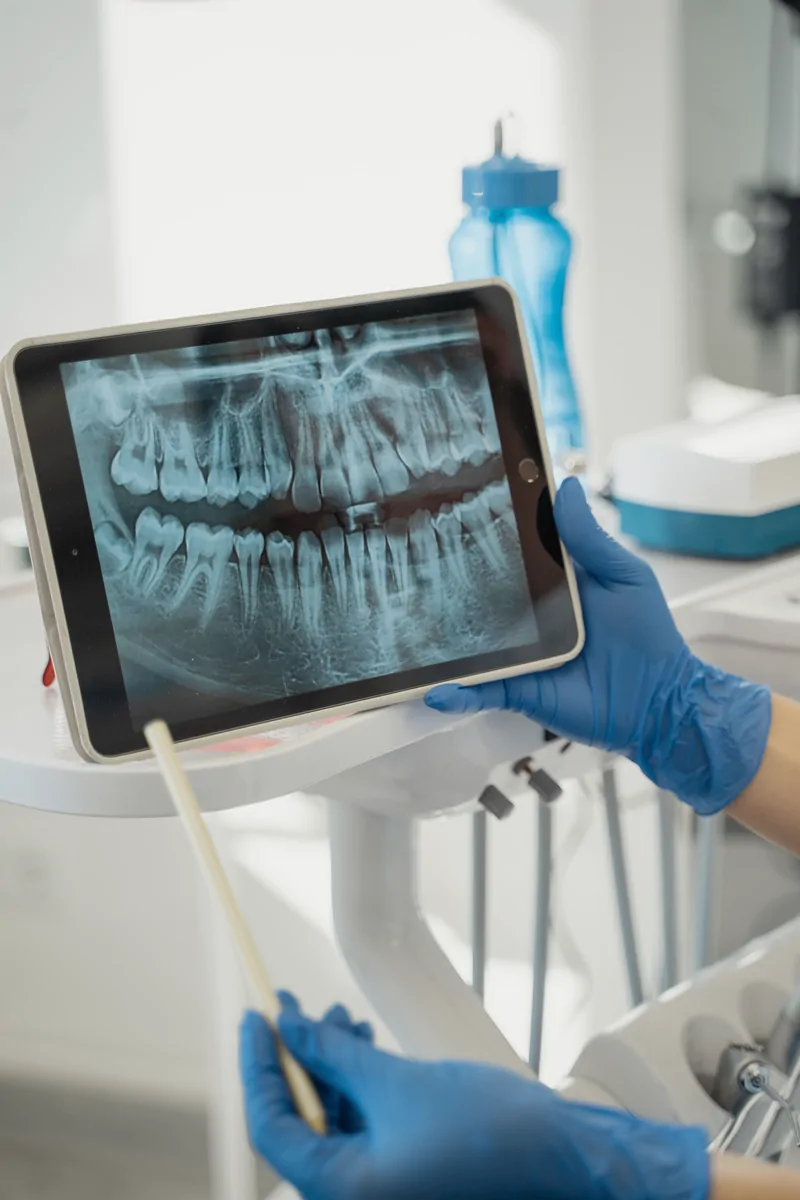
If much of the tooth is missing, a core of filling material — sometimes anchored by a post in a root-treated tooth — rebuilds enough structure to retain the crown.
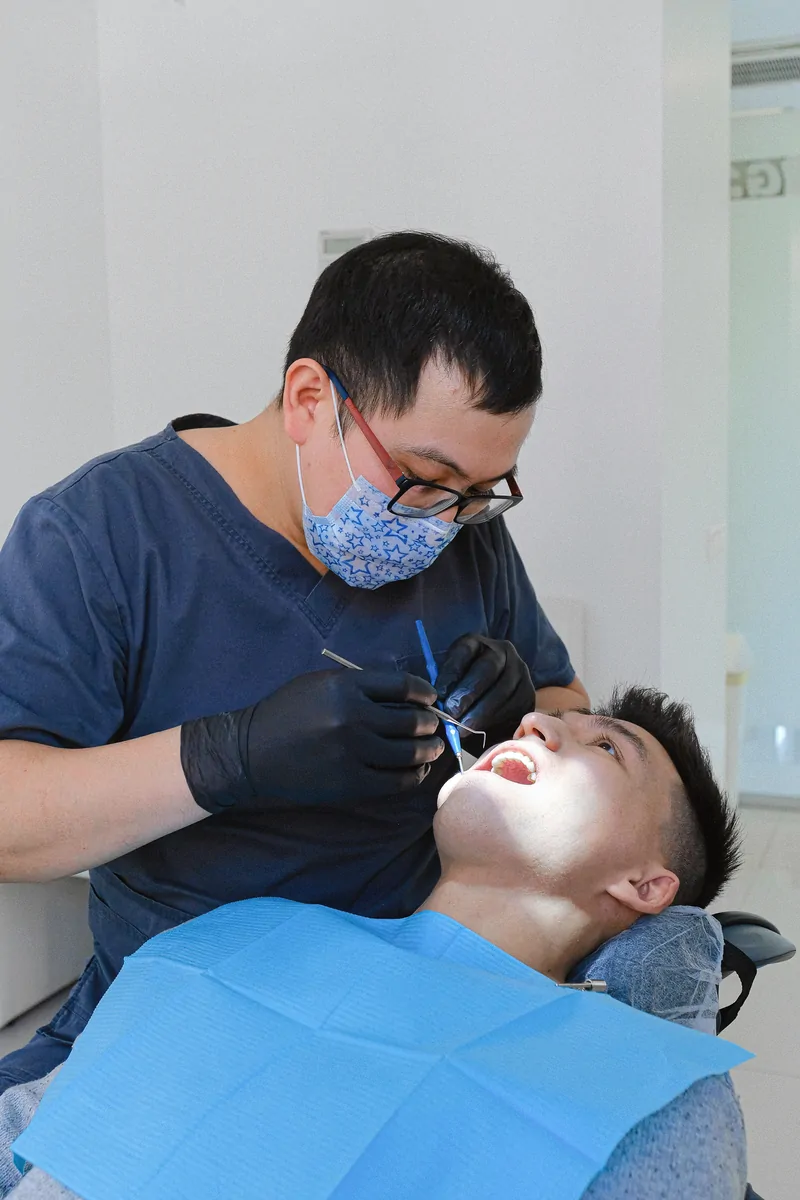
Under local anaesthetic, the tooth is reduced evenly on all sides and on the biting surface to make space for the crown. Metal-supported crowns and some all-ceramic types need slightly different amounts and shapes of reduction, with a defined margin near the gumline.
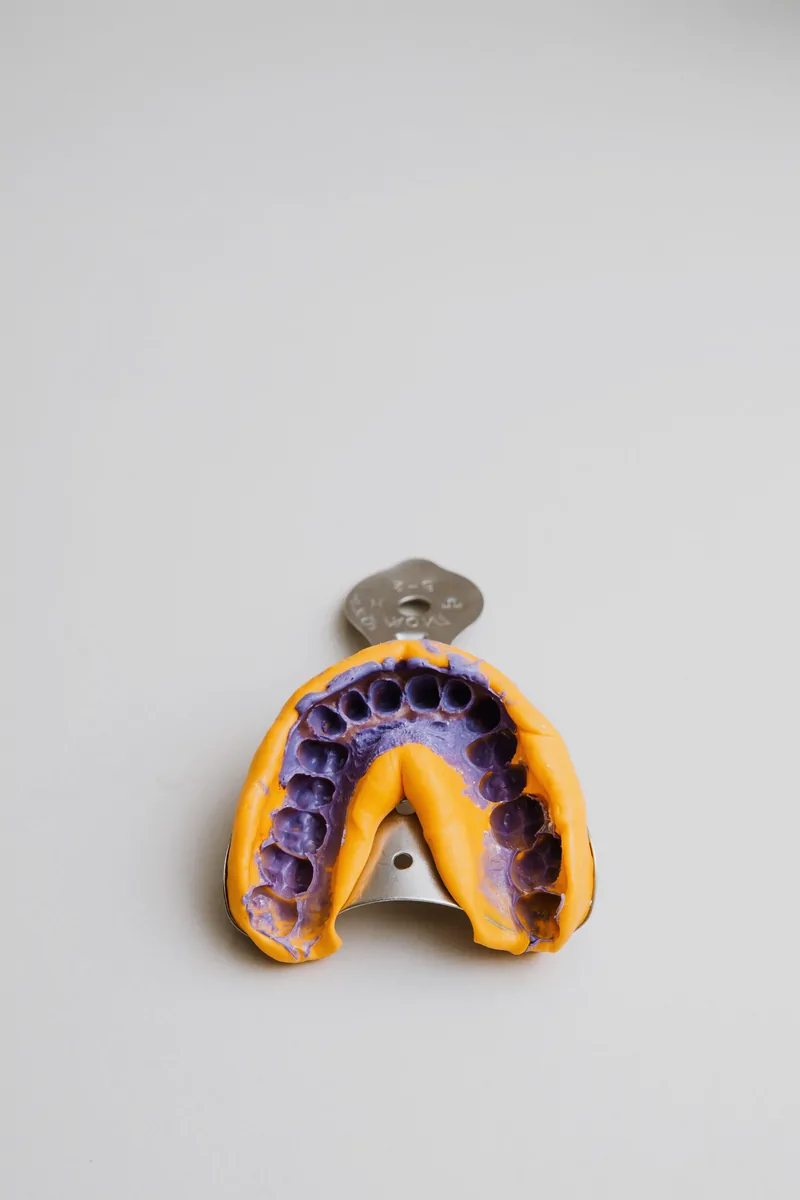
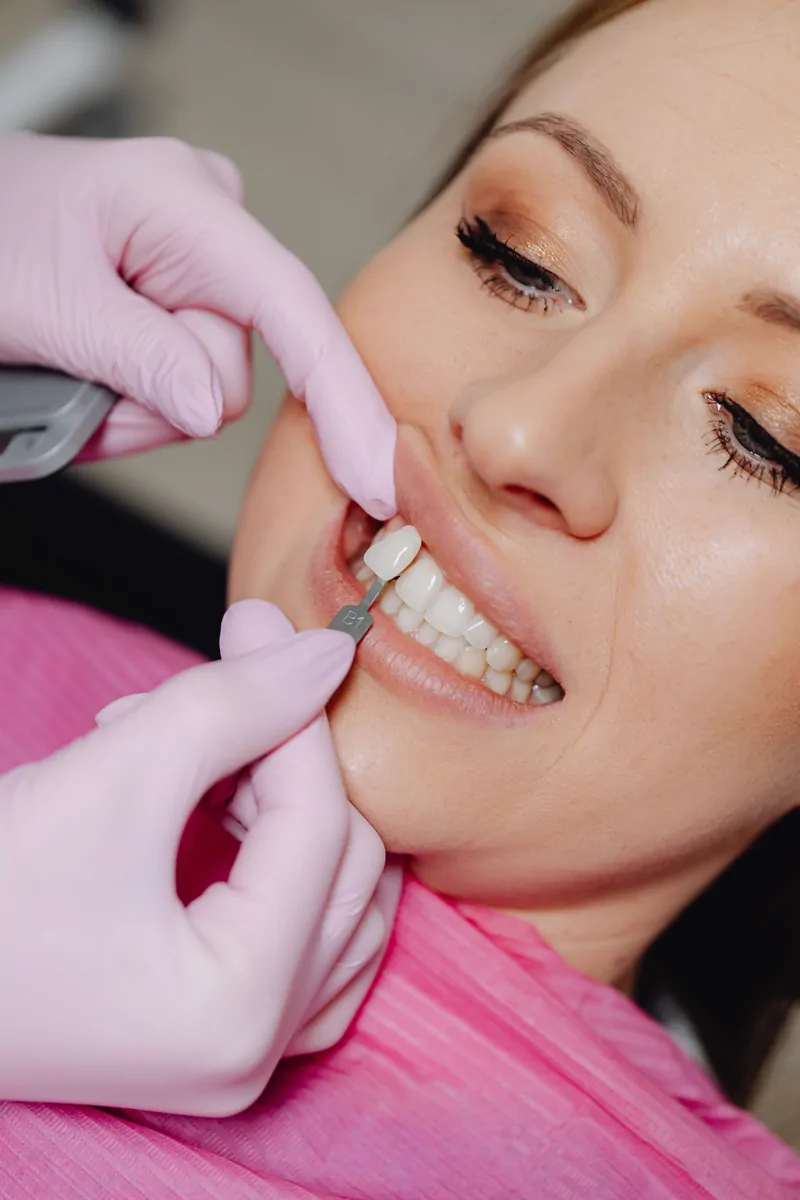
A digital scan or impression records the prepared tooth and bite. The shade is matched to neighbouring teeth, and a temporary crown is placed to protect the tooth while the laboratory makes the final crown.
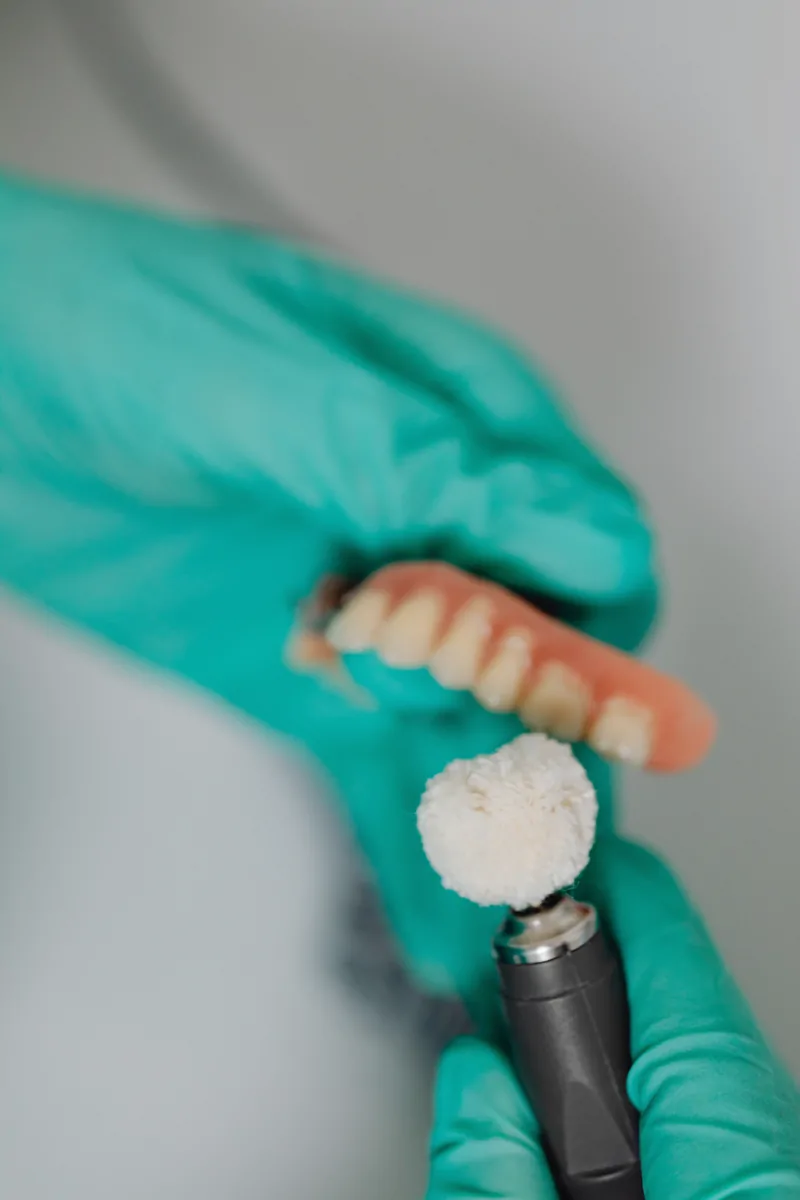
The temporary is removed and the final crown is tried in to check fit, contact with neighbouring teeth, shade and bite. Once approved, it is cemented or adhesively bonded, depending on the material, and the bite is fine-tuned.
Gallery



A porcelain crown covers the entire tooth and is chosen when the tooth itself needs strengthening; veneers and laminates cover only the front surface of a structurally sound tooth and need less reduction. Within crowns, a porcelain-fused-to-metal crown combines a metal framework with a porcelain surface, while all-ceramic crowns contain no metal. A zirconium crown is one type of all-ceramic crown: zirconia is a very strong ceramic that can be used on its own (monolithic) or as a core covered with layered porcelain. E-max crowns use lithium disilicate, which is more translucent than most zirconia but generally less strong. In short: veneers change appearance; crowns protect and restore, with the material chosen for each tooth.
Before & after treatment
Before you travel
Looking after them
In their words
Dental patients describe their experience — from the first conversation to aftercare.
All patient reviewsGoogle reviews
Spoken with us already? Share your experience on Google.
Honest reviews — good or critical — help the next person decide. We read every one and never offer anything in exchange.
Questions
General answers — your own plan always depends on an individual assessment.
All dental questionsPFM crowns have a metal core under the porcelain, which adds strength but can look more opaque. All-ceramic crowns have no metal, often look more natural, and their strength depends on the specific ceramic used.
A well-made crown matched to your neighbouring teeth is usually hard to notice. All-ceramic crowns tend to blend more easily on front teeth, while PFM crowns can show a darker margin if gums recede.
The preparation is done under local anaesthetic, so it should feel like having a filling. Some sensitivity afterwards is common and usually settles.
Many crowns serve well for a number of years, but this varies with your bite, hygiene, diet and the health of the underlying tooth. Regular check-ups help detect problems early.
No. Porcelain does not change colour with whitening, so if you want lighter teeth, whitening is usually done first so the crown can be matched to the new shade.
Crowns usually involve two visits several days apart to allow for laboratory work. Your coordinator can advise on scheduling once your treatment plan is known.
Also available
Free consultation
Tell us what you would like to change. A coordinator replies personally and arranges a dentist’s review of your photos — free, without obligation.
A person replies. Monday to Saturday, Istanbul time.
VHFree consultation
A coordinator replies personally — free, no obligation.