Treatment Guides
Planning Dental Implants in Istanbul: A Step-by-Step Guide
Dental implants are rarely a single-visit treatment. If you are travelling to Istanbul, understanding the stages, the healing time between them and the care you will need at home makes planning far calmer.
Why implants need a different kind of planning
A dental implant is a small post, usually made of titanium or zirconia, placed in the jawbone to support a crown, bridge or denture. Once healed, it can feel and function much like a natural tooth. What makes implants different from many other dental treatments is time: the bone needs to bond with the implant surface, a process known as osseointegration, and that cannot be hurried.
For patients who live locally, this simply means a few appointments spread across several months. For those travelling to Istanbul, it means thinking carefully about how many trips may be needed, how long to stay each time and how to look after the treated area once you are home. Good planning is less about speed and more about making each stage fit sensibly around healing.
Starting with an assessment
Most implant journeys begin before you travel. Many patients share recent photographs, any existing X-rays and a summary of their dental and medical history so that a clinician can form an initial impression. This early review can be useful for understanding the general shape of a plan, but it has clear limits. Bone volume, gum health and the condition of neighbouring teeth can only be judged properly in person.
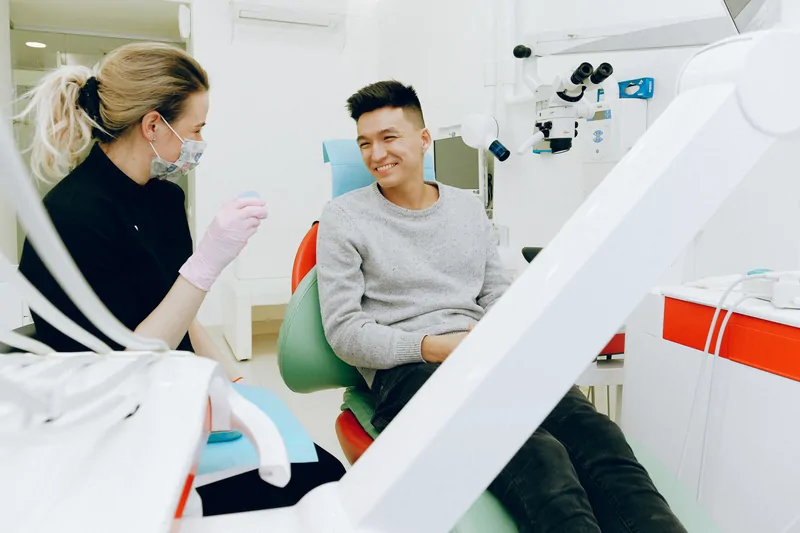
At your first appointment in the clinic, a clinician will usually examine your mouth, review your medical history and discuss your goals. It is worth being open about smoking, diabetes, medications that affect bone or blood clotting, and any history of gum disease, as these can all influence how implants heal and whether additional steps are advisable.
- A summary of your medical conditions and current medications
- Any recent dental X-rays or scans, ideally in digital form
- Notes on previous dental work, extractions or gum treatment
- Your priorities: appearance, chewing comfort, timescale or all three
Implants need time for the bone to bond with them, so treatment is usually spread across more than one visit.
The role of CBCT imaging
A standard dental X-ray shows teeth and bone in two dimensions. Cone beam computed tomography, usually called CBCT, adds a third dimension. It allows the clinician to see the height, width and density of the jawbone, the position of nerves and, in the upper jaw, the floor of the sinus.
This information shapes almost every decision that follows: the length and diameter of the implant, its angle, and whether there is enough bone to place it without additional procedures. Where bone has thinned after a tooth was lost some time ago, a bone graft or sinus lift may be suggested. These steps can add healing time, so it helps to know about them early rather than discovering them part-way through a trip.
Digital planning software can then be used to position implants virtually before any surgery takes place. In some cases a surgical guide is produced to help transfer that plan accurately to the mouth.
How staged visits usually work
Every plan is individual, but implant treatment for travelling patients is often organised into two main visits. The first focuses on assessment and implant placement; the second, after a period of healing, focuses on the final teeth. Some cases need an additional visit, for example if extractions or grafting must heal before implants can be placed.
- First visit: examination, CBCT, treatment planning, any extractions and implant placement, often with a temporary tooth or bridge where appropriate
- Healing at home: typically a period of several months while the implant integrates with the bone
- Second visit: checks on healing, digital or conventional impressions, try-in and fitting of the final crowns or bridge
- Further visits where needed: grafting, staged extractions or adjustments
The healing period between trips
The gap between visits is not idle time. It is when the most important biological work happens. The length of this period varies with bone quality, the location of the implant, whether grafting was performed and your general health. Your clinician will give you an estimate based on your own situation rather than a fixed rule.
In the first days after placement, some swelling, tenderness and minor bruising are common. Most people are advised to rest, follow a soft diet, avoid smoking and alcohol, and take any prescribed medication exactly as directed. It is often sensible not to fly on the very day of surgery and to allow a few days in Istanbul for an initial review before heading home.
Over the following weeks, the gum settles and the implant continues to integrate quietly beneath the surface. If you have a temporary tooth, you may be asked to avoid biting directly on it with anything hard.
Aftercare once you are home
Looking after implants at home is mostly about steady, gentle habits. Keep the area clean as instructed, using a soft brush and any rinse you have been given. Attend to follow-up messages from the clinic and send photographs if you are asked to. Above all, keep in touch if something feels wrong rather than waiting until your next visit.
It is also wise to let your local dentist know about the treatment. They can carry out routine examinations and hygiene appointments, and they may be the first to notice an issue. Ask the clinic for a written summary, including the implant system used, so that any future dentist has the information they need.
- Persistent or increasing pain after the first few days
- Swelling that worsens rather than improves
- Bleeding that does not settle with gentle pressure
- A temporary tooth or healing cap that feels loose
- Fever or a bad taste that suggests infection
Questions worth asking before you commit
A good implant plan should feel understandable. If anything is unclear, ask. The answers will help you judge whether the timeline is realistic and whether you are comfortable with the approach being proposed.
- How many visits do you expect my treatment to need, and roughly how long should each one be?
- Will I need bone grafting or a sinus lift, and how does that change the timeline?
- What will I have in place of missing teeth while the implants heal?
- Which implant system and restorative materials are you proposing, and why?
- What written records will I receive to share with my dentist at home?
- How should I contact the clinic if I have a concern after I return?
Taking the next step
Implants can be a durable and comfortable way to replace missing teeth, but they reward patience. Allowing enough time for healing, building flexibility into your travel and keeping good records will do more for the outcome than trying to compress treatment into as few days as possible.
If you are considering implants and would like to understand how a plan might look for you, a consultation arranged through VERAKS HEALTH can help you explore the stages, the likely number of visits and the care involved before you make any decision.
Key takeaways
- Implants need time for the bone to bond with them, so treatment is usually spread across more than one visit.
- CBCT imaging shows bone volume, nerve position and sinus anatomy, and shapes the whole plan.
- Grafting or a sinus lift may be suggested where bone is thin, which can lengthen the timeline.
- The healing period between trips is essential and its length is assessed individually.
- Keep your local dentist informed and ask for written records of the implant system used.

Written by the VERAKS HEALTH Editorial Team. This article is general education. It is not medical advice and does not replace an examination by a qualified clinician. Medical disclaimer.
The journal
Reading for
the curious.
Guides on treatments, recovery and travelling to Istanbul — written to help you ask better questions.
All articles





Free consultation
Ready when you are — let’s talk.
Share what you’d like to change. A coordinator replies personally, explains what a clinician would need to see and answers your practical questions.