Hair Restoration
How Hairline Design Influences Natural-Looking Results
A hairline is the first thing people notice and the hardest thing to change later. Here is how position, shape, graft choice and long-term planning combine to make a transplanted hairline look natural.
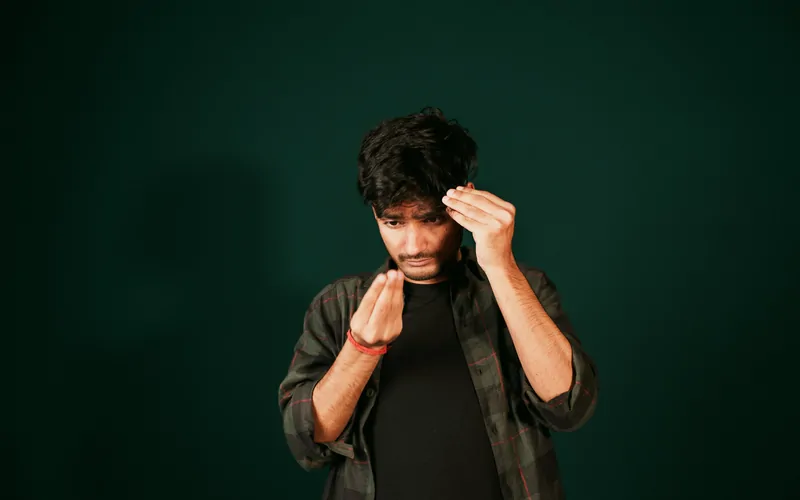
Why the hairline matters so much
When people imagine a hair transplant, they often picture density: more hair, fuller coverage. In practice, the detail that most influences whether a result looks natural is usually the hairline. It frames the face, it is seen from the front in every conversation and photograph, and it is the area where an unnatural shape, direction or edge is easiest to spot.
The hairline is also the part of the plan that is hardest to undo. Grafts placed too low, too straight or at the wrong angle can be difficult to correct, and removing or relocating them uses time, money and donor hair that may be needed elsewhere. That is why careful clinicians spend a significant part of the consultation on design, and why it is worth understanding the principles before you agree to a line drawn on your forehead.
Position: designing for the decades ahead
Many people would like back the hairline they had at eighteen. A juvenile hairline usually sits low and straight across the forehead, and on an adult face, especially one that will keep ageing, it can look out of place. A mature hairline typically sits a little higher and recedes gently at the temples. Designing for this is not about settling for less; it is about creating a line that will still suit your face at forty-five, sixty and beyond.
Future hair loss is the other reason for caution. A transplant does not stop pattern hair loss in the native hair around it. If a low hairline is created and the hair behind it continues to thin, the result can be an isolated band of hair with a gap behind it, which may need more grafts than the donor area can supply. Clinicians often look at your age, family history and the current pattern of loss, and may discuss medical therapy with a doctor, before deciding how far forward the line can sensibly go.
- Facial proportions, often judged from the brow to the hairline and the rest of the face
- Your age and how hair loss has progressed so far
- Family history of hair loss
- The size and quality of your donor area
- Whether medical treatment to protect native hair is part of the plan
The hairline has more influence on a natural look than graft count alone, and it is the hardest part to correct later.
Shape and irregularity
Natural hairlines are not straight lines. Seen closely, they have small peaks and dips, a softly zig-zagging edge and a gradual transition from a few fine hairs at the front to fuller density behind. The temples usually recede to some degree, and the outline curves where it meets the sides of the head. Many people also have a slight widow’s peak or a central point, and the two sides are rarely perfectly symmetrical.
A good design reproduces this. Rather than a hard edge, clinicians often describe a transition zone at the front, where single hairs are spaced irregularly, followed by a defined zone with greater density. Small clusters or isolated hairs placed slightly ahead of the main line can soften it further. The aim is a hairline that looks as if it has always been there, not one that announces itself.
Hair type changes the details. Fine, straight hair shows the edge more clearly and benefits from very soft transitions. Curly or afro-textured hair covers more scalp per hair and often has a more rounded natural outline. Women’s hairlines are generally lower and more rounded at the temples than men’s. The design should follow your hair and face rather than a generic template.
Graft choice, angle and direction
The front line is usually built from single-hair follicular units, which look finer and more natural than multi-hair grafts at the edge. Two- and three-hair units are then placed further back to build density. Selecting and sorting grafts by the number of hairs they contain is a detailed task, and it makes a visible difference at the front.
Angle and direction are just as important. Hair at the hairline normally grows forwards and slightly upwards at a fairly shallow angle, with the direction changing gradually towards the temples. If grafts are placed too upright, the hair stands up unnaturally and the scalp shows between them. Whether channels are opened first, as in FUE and sapphire FUE, or grafts are implanted with a pen, as in DHI, the principle is the same: each graft should follow the natural flow of the surrounding hair.
- Single-hair grafts at the leading edge, denser grafts behind
- Shallow, forward-facing angles that follow the natural direction
- Gradual changes in direction towards the temples
- Spacing that becomes denser away from the edge
Density: what is realistic at the front
People sometimes assume that more grafts at the hairline will always look better. Very dense packing can strain the blood supply to the grafts and reduce growth, and it uses donor hair that might be needed later. Clinicians therefore aim for density that looks natural from normal viewing distances, recognising that hair calibre, colour contrast with the skin and curl all influence how full a given number of grafts appears.
This is one reason graft numbers are given as an estimated range rather than a promise. The same number of grafts can look quite different on fine blond hair over pale skin and on coarse dark hair. A second session, after the first has grown, is sometimes planned to add density once the result can be judged.
Questions to ask about your hairline design
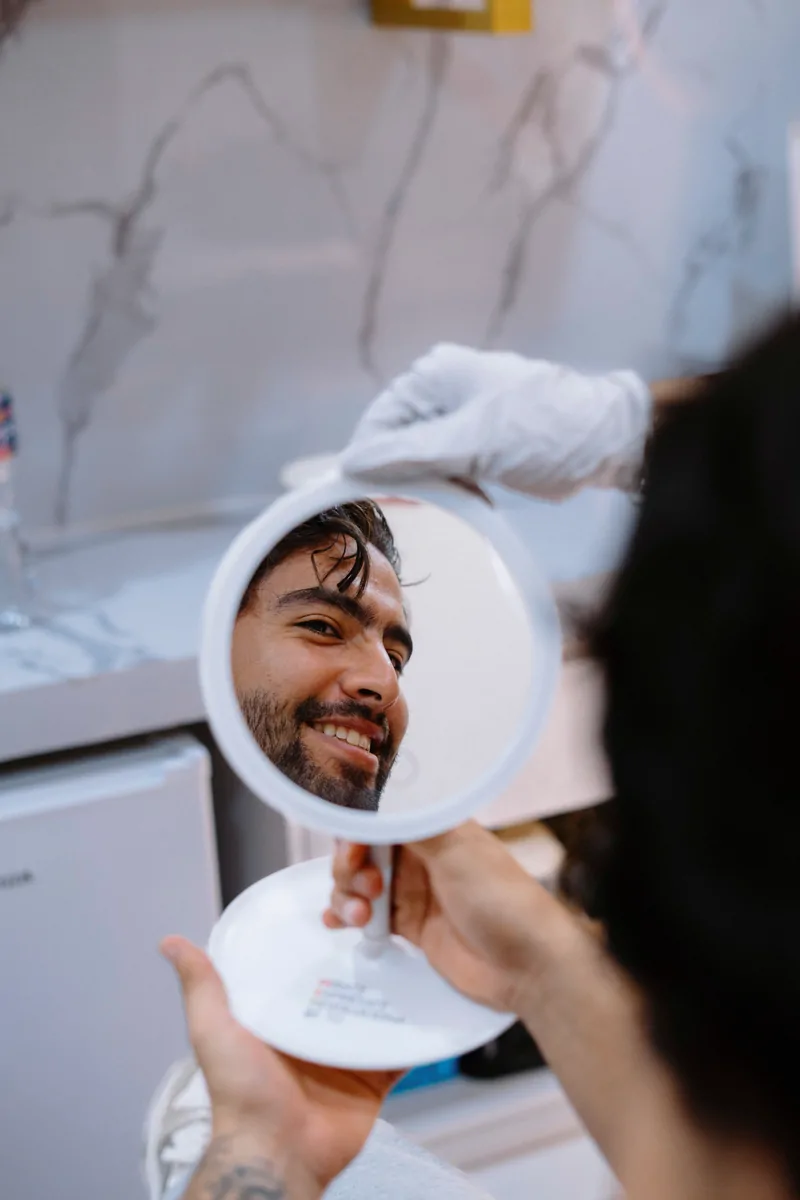
You should see the proposed line before the procedure, usually drawn on your forehead, and have time to look at it in a mirror and discuss it. A responsible clinician will explain why the line is placed where it is and how it allows for future loss. It is reasonable to ask for changes, and equally reasonable for a clinician to explain why a lower or straighter line would not be in your long-term interest.
- Why is the line at this height, and how does it allow for future hair loss?
- How will the temples be treated now and later?
- Which grafts will be used at the edge, and how will angles be set?
- How many grafts does the plan involve, as a range, and what does that leave in the donor area?
- Who will design the hairline and who will place the grafts?
Key takeaways
- The hairline has more influence on a natural look than graft count alone, and it is the hardest part to correct later.
- A mature, slightly irregular line usually ages better than a low, straight juvenile hairline.
- Single-hair grafts, shallow angles and natural direction at the edge make the transition look soft.
- Design must allow for future hair loss and the limits of the donor area.
- You should see and discuss the drawn hairline before the procedure; suitability is confirmed only after an in-person assessment.

Written by the VERAKS HEALTH Editorial Team. This article is general education. It is not medical advice and does not replace an examination by a qualified clinician. Medical disclaimer.
The journal
Reading for
the curious.
Guides on treatments, recovery and travelling to Istanbul — written to help you ask better questions.
All articles



Free consultation
Ready when you are — let’s talk.
Share what you’d like to change. A coordinator replies personally, explains what a clinician would need to see and answers your practical questions.