Hair Restoration
Planning a Hair Transplant Consultation
A well-prepared consultation leads to a clearer plan. Here is what to gather beforehand, what the assessment usually covers and the questions worth asking.
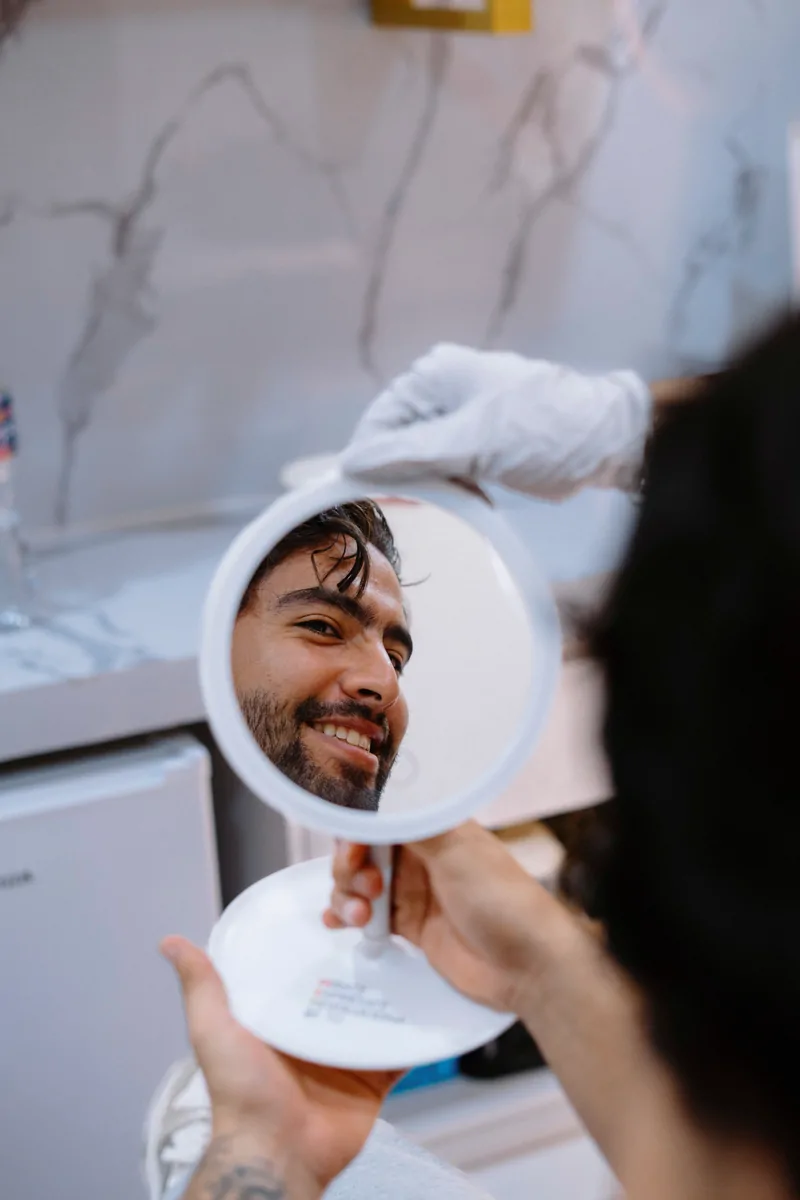
Why preparation helps
A hair transplant consultation is your opportunity to understand your hair loss, your options and the reasoning behind any proposed plan. The more information you can share, the more useful the conversation is likely to be.
Preparation also helps you take part as an equal. Hair restoration involves choices about design, density and the use of a limited donor area, and these choices are easier to weigh when you understand the factors involved and know which questions to ask.
What to gather beforehand
Many consultations begin with photographs, especially if you are first in touch from abroad. Clear, well-lit photographs of the front, top, crown and back of the scalp, with hair dry and not styled to cover thinning areas, give the team a realistic first impression.
It also helps to think back over how your hair has changed. When did you first notice thinning, how quickly has it progressed and does anyone in your family have a similar pattern? These details help the team consider how your hair loss may develop in the future.
- Recent photographs from several angles in good light
- Older photographs showing your hair in earlier years
- A list of current medicines and any supplements
- Details of previous hair treatments or procedures
- Relevant medical history, including scalp conditions
Clear photographs and a history of your hair loss make the consultation more useful.
What the assessment covers
In person, the assessment looks closely at both the area of thinning and the donor area. The donor area, usually at the back and sides of the scalp, is examined for density, hair characteristics and overall quality, because it determines how many grafts can be responsibly used now and in the future.
The pattern and stage of your hair loss are considered too, along with your age and any signs that loss is still progressing. Some types of hair loss are not suited to transplantation, and in some cases the doctor may suggest investigating or treating an underlying cause first.
- Pattern and extent of hair loss
- Donor area density and hair quality
- Hair characteristics such as thickness, colour and curl
- Scalp health and any conditions needing attention
- Your general health and medical history
Discussing goals and design
It is natural to have a clear picture of the result you would like, and it is worth sharing it. A good consultation then explores how that goal fits with your donor capacity and the likely progression of your hair loss.
Hairline design is often central to this conversation. A hairline that looks right today should also suit you in years to come, and a natural result usually has a soft, slightly irregular edge. Your clinician may suggest prioritising the front of the scalp, where it has the most impact on framing the face, and explain how density will be distributed elsewhere.
Understanding the proposed plan
By the end of the consultation, you should understand what is being suggested and why. This includes the technique, the approximate number of grafts being considered and how the donor area will be used. Techniques such as FUE, Sapphire FUE and DHI each have their place, and the choice should be explained in relation to your hair rather than presented as a matter of fashion.
You should also hear about the limits of the plan. A transplant cannot stop natural hair loss from continuing in other areas, and some people may benefit from additional treatment to support existing hair. Recovery, the typical pattern of shedding and regrowth, and the time before results can be judged should all be discussed.
- Which technique is proposed, and why it suits your hair
- How many grafts are being considered and where they will go
- How the donor area will be protected for the future
- Whether an unshaven approach is possible or advisable
- What recovery and aftercare will involve
Practical questions for travelling patients
If you are travelling to Istanbul for treatment, it helps to understand how the procedure fits around your stay. Ask how many days you are likely to need, when the first wash and check-up take place and when it is reasonable to fly home.
It is equally important to know how follow-up will work once you leave. Ask how you can send progress photographs, who will answer your questions and what to do if something concerns you during recovery.
Taking your time
A consultation should never feel rushed or pressured. It is reasonable to take time to consider the plan, ask further questions or seek clarification before deciding. A clinician who explains their reasoning openly and is honest about limitations is usually a good sign.
Suitability for a hair transplant can only be decided after an individual assessment. If you would like to start that conversation, the VERAKS HEALTH team can arrange a consultation and help you prepare.
Key takeaways
- Clear photographs and a history of your hair loss make the consultation more useful.
- The donor area is assessed carefully because it is a limited resource.
- A good plan explains the technique, graft numbers and hairline design in relation to your hair.
- There should be no pressure to decide, and suitability depends on an individual assessment.

Written by the VERAKS HEALTH Editorial Team. This article is general education. It is not medical advice and does not replace an examination by a qualified clinician. Medical disclaimer.
The journal
Reading for
the curious.
Guides on treatments, recovery and travelling to Istanbul — written to help you ask better questions.
All articles







Free consultation
Ready when you are — let’s talk.
Share what you’d like to change. A coordinator replies personally, explains what a clinician would need to see and answers your practical questions.