Smile Aesthetics
What to Know Before Getting Veneers: From Consultation to Fitting
Veneers can change the shape, colour and proportion of a smile, but the process involves several careful steps. Knowing what happens at each stage helps you make a confident, informed decision.

What veneers are designed to do
A veneer is a thin covering bonded to the front surface of a tooth. Veneers are mainly used to improve appearance: altering colour that does not respond to whitening, refining the shape of worn or chipped edges, closing small gaps or bringing a little more harmony to teeth that look uneven.
They are not a solution for every concern. Teeth that are heavily filled or structurally weak may be more suited to crowns, and significant crowding is sometimes more sensibly addressed with orthodontic treatment first. Part of the consultation is working out whether veneers are the right tool for your particular smile.
The consultation
The first appointment is a conversation as much as an examination. Your clinician will ask what you like and dislike about your smile, look closely at your teeth and gums, and check your bite. X-rays help reveal decay, old fillings or problems beneath the surface that would need attention before any cosmetic work.
It is helpful to come with an idea of what you are hoping for, while staying open to advice. Photographs of smiles you admire can be a useful starting point, but your own face, lip line and tooth proportions will shape what looks natural on you.
- Which teeth are you concerned about, and why?
- Do you grind or clench, particularly at night?
- Have you tried whitening or orthodontics before?
- How natural or how bright would you like the result to look?
Veneers are mainly cosmetic and suit teeth that are structurally sound.
Porcelain or composite?
Veneers are usually made from either porcelain or composite resin, and the choice affects the process, the look and the long-term care.
Porcelain veneers, including those made from lithium disilicate, are crafted in a dental laboratory. They tend to resist staining well and can reproduce the translucency and lustre of natural enamel. They usually involve at least two appointments, with time in between for laboratory work, and they are more involved to repair if damaged.
Composite veneers are sculpted directly onto the tooth in the chair using tooth-coloured resin. They can often be completed in a single longer visit and are easier to adjust or repair. Composite may, however, pick up stains more readily and need polishing or refreshing sooner than porcelain.
Planning and previewing the result
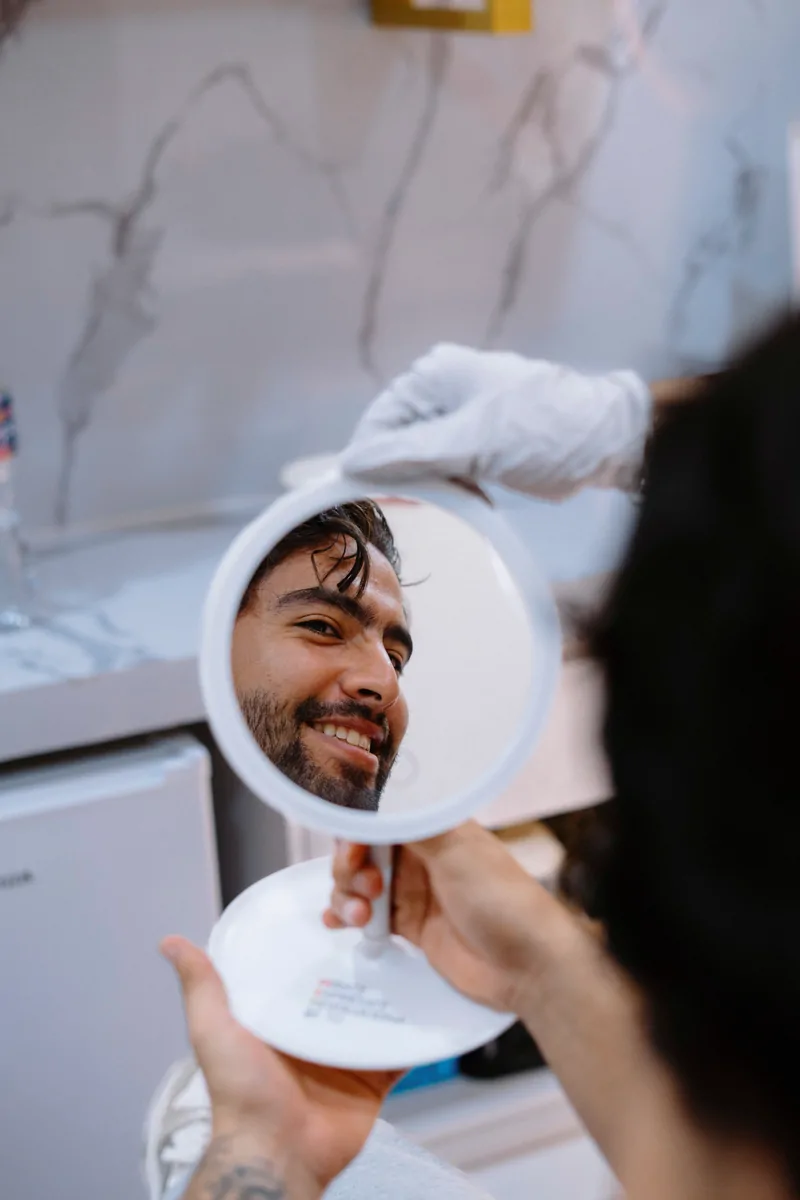
Before any tooth is prepared, many clinicians will plan the new smile in detail. This may involve photographs, digital scans and smile design software, followed by a wax-up model of the proposed shapes. A mock-up, a temporary material placed over your existing teeth, can then let you see and feel the proposed length and shape in your own mouth.
This is the moment to comment. Do you feel the teeth are too long, too square, too bright? A preview is not an exact copy of the final veneers, but it is a valuable way to agree on direction before permanent changes are made.
Preparation, and why it is irreversible
For most porcelain veneers, a thin layer of enamel is removed from the front of the tooth so that the veneer can sit naturally without looking bulky. The amount depends on the planned change in shape and colour and on the position of the tooth. In some cases, minimal-preparation approaches may be possible; in others, more reduction is needed.
It is important to understand that this enamel does not grow back. Once a tooth has been prepared, it will always need a veneer or another restoration to cover it. Veneers also have a finite lifespan and will eventually need replacing, so choosing them is a long-term commitment rather than a single event.
Composite veneers can sometimes be placed with little or no preparation, which keeps more options open for the future. Your clinician can explain how much reduction your plan would involve and whether alternatives exist.
Temporaries, fitting and the first weeks
After preparation, impressions or digital scans are sent to the laboratory, and temporary veneers are usually placed to protect the teeth and give you a feel for the new shape. Temporaries are not as strong as the final restorations, so it is wise to be gentle with them.
At the fitting appointment, each veneer is tried in so that you and your clinician can check fit, shade and appearance. Once you are both satisfied, the veneers are bonded in place and the bite is carefully checked and adjusted.
- Some temporary sensitivity to hot and cold is common and usually settles
- Your bite may feel slightly different for a few days
- Speech can feel unusual briefly, especially with sounds like “s” and “f”
- A review appointment allows small refinements to edges or bite
Living with veneers
Veneers are cared for much like natural teeth. Brush twice a day with a non-abrasive toothpaste, clean between teeth daily and keep up regular examinations and hygiene appointments. The tooth beneath a veneer can still develop decay at the edges, and healthy gums are essential to the appearance of the result.
It is sensible to avoid using your teeth as tools, biting very hard objects such as ice or pen lids, and opening packaging with your teeth. If you grind at night, a custom night guard can help protect both veneers and natural teeth.
Making an informed choice
Veneers can be a rewarding way to refine a smile, but they work well when the decision is made carefully, with a clear understanding of preparation, maintenance and long-term commitment. Taking time to preview the result and ask questions is always worthwhile.
If you are considering veneers and would like to explore whether porcelain, composite or another approach may suit you, a consultation with the VERAKS HEALTH team is a calm place to start.
Key takeaways
- Veneers are mainly cosmetic and suit teeth that are structurally sound.
- Porcelain resists staining and mimics enamel well; composite is quicker and easier to repair.
- A mock-up or digital preview lets you agree on shape and length before any preparation.
- Removing enamel is irreversible, and veneers will eventually need replacing.
- Daily cleaning, regular check-ups and a night guard if you grind all help veneers last.

Written by the VERAKS HEALTH Editorial Team. This article is general education. It is not medical advice and does not replace an examination by a qualified clinician. Medical disclaimer.
The journal
Reading for
the curious.
Guides on treatments, recovery and travelling to Istanbul — written to help you ask better questions.
All articles




Free consultation
Ready when you are — let’s talk.
Share what you’d like to change. A coordinator replies personally, explains what a clinician would need to see and answers your practical questions.