Treatment Guides
E-max vs Zirconium Crowns: How the Two Materials Compare
Zirconia and e.max are two of the most widely used all-ceramic crown materials. Each has its own balance of strength and appearance, and the right choice depends on the tooth, the bite and the smile.
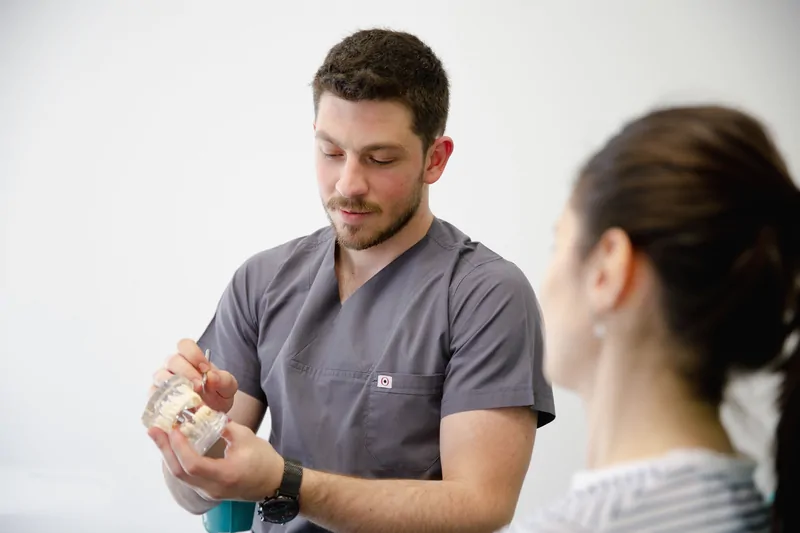
Two ceramics, two different characters
When patients ask about crowns today, the conversation often turns to two materials: zirconia, sometimes called zirconium, and lithium disilicate, which is widely known by the brand name e.max. Both are metal-free ceramics, both can look natural, and both are used every day in modern dentistry. Yet they behave differently, and those differences matter when deciding which one suits a particular tooth.
It helps to think of the choice less as a contest and more as a matter of fit. A material that is ideal for a back molar under heavy chewing forces may not be the first choice for a front tooth where light and translucency are everything, and the reverse is also true.
What zirconia is
Zirconia is a very tough ceramic based on zirconium dioxide. It is usually milled from a block using digital design and then sintered, a heating process that gives it its final strength. Its main appeal is resistance to fracture, which is why it is often considered for teeth that take a lot of load.
Earlier forms of zirconia were quite opaque and chalky in appearance, so they were often layered with porcelain on the visible surfaces. Newer, more translucent zirconias have narrowed that gap considerably, and many crowns are now made in a single material and then stained and glazed. Even so, zirconia generally remains a little less lifelike in translucency than glass ceramics, particularly in thin areas at the front of the mouth.
- High resistance to chipping and fracture
- Often suited to molars, premolars and bridges
- Can mask darker underlying tooth structure or metal posts
- Translucency varies with the type of zirconia used
Zirconia is generally the tougher material and is often considered for back teeth, bridges and implant crowns.
What lithium disilicate (e.max) is
Lithium disilicate is a glass ceramic. It can be pressed or milled and is known for its natural-looking translucency, which allows light to pass through and reflect in a way that resembles enamel. This makes it popular for front teeth, where subtle optical qualities are most noticeable.
It is strong for a glass ceramic and can be bonded to the tooth with adhesive cements, which can help support the restoration and the tooth together. It is used for crowns, veneers, inlays and onlays. While it is less fracture-resistant than zirconia, it is often considered robust enough for many single-tooth situations, depending on the bite and the space available.
- Lifelike translucency and shade blending
- Often favoured for front teeth and visible areas
- Can be adhesively bonded to tooth structure
- Also used for veneers, inlays and onlays
How preparation differs
Every crown requires the tooth to be shaped to make room for the material. The amount of reduction depends on the material’s minimum thickness, the position of the tooth and how much it needs to change in shape or colour.
Because modern zirconia can be strong in relatively thin sections, it may sometimes allow a slightly more conservative preparation in certain areas. Lithium disilicate needs enough thickness to achieve its strength and appearance, but its ability to be bonded can be an advantage where tooth structure is limited. In practice, the differences are case-specific, and your clinician will explain how much of your tooth is likely to be reduced and why.
It is worth remembering that crown preparation is irreversible. Once a tooth has been shaped, it will always need a covering of some kind, and crowns will eventually need replacing over the course of a lifetime.
Weighing the trade-offs
No single material is superior in every respect. The following points summarise the general contrasts, though individual cases can and do vary.
- Strength: zirconia generally offers higher fracture resistance; e.max is strong for a glass ceramic
- Appearance: e.max tends to offer more natural translucency; newer zirconias have closed some of the gap
- Masking: zirconia can hide dark tooth structure more easily; e.max may let some underlying colour show
- Bonding: e.max is typically bonded adhesively; zirconia is often cemented, with bonding possible in some protocols
- Opposing teeth: highly polished surfaces of either material are generally considered kind to opposing teeth; rough surfaces are not
Where each tends to be used
As a broad pattern, many clinicians lean towards lithium disilicate for front teeth in patients with a balanced bite, and towards zirconia for back teeth, longer bridges, implant crowns and patients who grind or clench. However, these are tendencies rather than rules.
A smile makeover may use both: e.max at the front for its optical qualities and zirconia further back for durability. With careful shade matching and good communication between clinician and laboratory, the two can be made to look consistent in the mouth.
Why the decision is made at assessment
It is natural to arrive with a preference, perhaps after reading about a material online. The final recommendation, though, depends on things that can only be seen and measured in person: the amount of healthy tooth left, the colour of the underlying structure, the space available, the gums and, very importantly, the way your teeth meet when you bite and chew.
At assessment, your clinician will usually examine your teeth, take X-rays and scans, and talk through the options with you. If you grind your teeth, a night guard may be recommended whichever material is chosen. Do ask why a particular material is suggested for each tooth; a clear explanation is a good sign that the plan has been thought through.
If you would like to discuss whether zirconia, e.max or a combination may suit your teeth, a consultation arranged through VERAKS HEALTH is the place to talk through the options with a licensed dentist.
Key takeaways
- Zirconia is generally the tougher material and is often considered for back teeth, bridges and implant crowns.
- Lithium disilicate (e.max) is valued for natural translucency and is often favoured for front teeth.
- Both require irreversible tooth preparation, and the amount depends on the tooth and material.
- Many treatment plans combine both materials in different parts of the mouth.
- The final choice depends on your bite, tooth structure and goals, assessed in person.
Written by the VERAKS HEALTH Editorial Team. This article is general education. It is not medical advice and does not replace an examination by a qualified clinician. Medical disclaimer.
The journal
Reading for
the curious.
Guides on treatments, recovery and travelling to Istanbul — written to help you ask better questions.
All articles





Free consultation
Ready when you are — let’s talk.
Share what you’d like to change. A coordinator replies personally, explains what a clinician would need to see and answers your practical questions.